maintenance kpis
Best Maintenance KPIs Every Manager Should Track
Key Performance Indicators, or KPIs, are measurable values that help organizations gauge their success in achieving specific objectives.
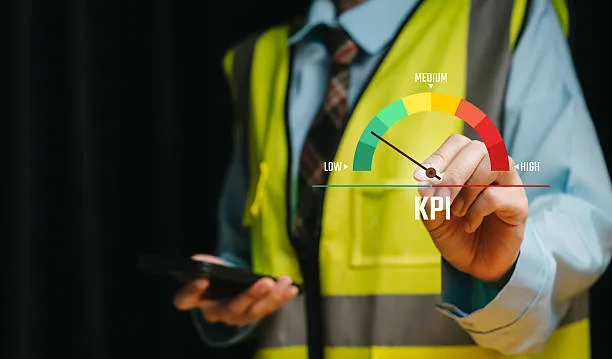
In today’s fast-paced corporate world, the function of maintenance is more vital than ever. Machinery and equipment are the backbone of many operations, and managers must ensure their teams are working efficiently and effectively. But how can you assess success in maintenance? There are KPIs for maintenance that can help with that. These critical performance metrics are essential signposts for managers to track performance, find opportunities for growth and ultimately achieve improved results.
Whether you're heading a manufacturing facility or managing facilities in a corporate context, understanding which indicators to monitor can make all the difference.
There are many facets you need to consider when evaluating your maintenance strategy, from equipment reliability to safety compliance. Join us as we explore essential Maintenance KPIs every manager should track to enhance productivity and maintain operational excellence.
Reasons for needing KPIs and what are they?
Key Performance Indicators, or KPIs, are measurable values that help organizations gauge their success in achieving specific objectives. They provide a clear framework for assessing performance and progress over time.
KPIs allow managers to focus on what truly matters. Instead of getting lost in daily tasks, they bring to light important things that need to be looked at. This clarity is essential for decision-making.
Keeping track of these metrics creates accountability within teams. When employees see how their work directly impacts KPIs, they are more likely to stay engaged and motivated.
KPIs can also help you see patterns and trends. By analyzing data over time, managers can identify strengths and weaknesses in processes or equipment usage.
Integrating KPIs into maintenance strategies empowers businesses to optimize operations continuously. It transforms vague goals into actionable insights that drive efficiency and enhance overall performance.
The different types of maintenance KPIs
Maintenance KPIs can be categorized into several distinct types, each serving a unique purpose.
First, we have the leading signs. These indicators are used to forecast future performance and to enable managers to take proactive steps to avoid problems from occurring.
Next are lagging indicators. They examine past performance and outcomes. While useful for understanding what has happened, they don't provide insights for future actions.
Then there are operational KPIs focused on maintenance processes themselves. Metrics like Mean Time To Repair (MTTR) or Mean Time Between Failures (MTBF) fall into this category.
Financial KPIs gauge the cost-effectiveness of maintenance activities. Understanding costs related to downtime versus scheduled maintenance is crucial for budget management.
Safety and compliance KPIs ensure all regulations are met, while equipment integrity and worker safety are considered. Each type plays an essential role in creating a comprehensive view of your maintenance operations.
Key performance indicators for equipment reliability
Any repair manager knows how important it is for equipment to work properly. It has an immediate effect on profits and productivity. Your tools will work at their best if you keep an eye on the right KPIs.
Mean Time Between Failures (MTBF) is an important number to keep an eye on. It measures the average time between equipment failures, highlighting how dependable your machinery really is. A higher MTBF indicates better reliability.
Another important KPI is Mean Time To Repair (MTTR). The speed at which teams can fix broken equipment is shown by this measure. Shorter repair times keep things running smoothly and cut down on downtime.
Also consider Overall Equipment Effectiveness (OEE). This all-encompassing measure checks the quality, performance, and availability of production processes. Managers can find places that need improvement and make the best use of their assets by looking at OEE.
Tracking these indicators provides valuable insights into equipment health and operating efficiency, paving the way for more informed decision-making in maintenance strategies.
Metrics for maintenance efficiency and productivity
It is important to keep track of how productive and efficient repair workers are so that things run more smoothly. One key metric is Mean Time to Repair (MTTR), which shows the average time taken to fix equipment. A repair team that works more efficiently will have a lower MTTR.
Another important measure is Maintenance Cost as a Percentage of Replacement Asset Value (RAV). This helps managers evaluate how much they are spending on upkeep compared to the value of their assets.
Monitoring the Planned Maintenance Percentage (PMP) can also give you information about how well your team is doing. The higher this percentage, the more proactive your approach, which typically leads to fewer breakdowns.
Overall Equipment Effectiveness (OEE) is a number that combines metrics for quality, effectiveness, and availability. It offers a clear picture of how well equipment operates in practice versus its potential output. These metrics form the backbone of informed decision-making in any maintenance strategy.
Measuring safety and compliance in maintenance
It is very important for any business to keep track of safety and compliance in maintenance. It makes sure that everything is done in line with the company's rules and best practices.
Key performance indicators (KPIs) related to safety can include the number of incidents, near misses, or violations per quarter. Keeping an eye on these metrics over time helps you spot trends.
Also, keeping an eye on the percentage of people who finish their training shows how well the staff knows safety rules. Regular audits are also very important for making sure that rules set by regulatory bodies are followed.
Teams can analyze data better when they have good reporting systems in place. This not only enhances accountability but also promotes a culture of safety within the workplace.
Putting safety KPIs at the top of the list lowers risks and improves operational efficiency. A safe environment benefits employees while adding positively to overall business goals.
How to track and analyze KPI data effectively
To track and analyze KPI data effectively, begin by choosing the right tools. Software like CMMS or ERP systems can help you collect all of your info in one place. Make sure to pick a platform that allows for real-time updates.
Next, establish clear benchmarks based on historical performance. This gives your KPIs some background and helps you see patterns over time. Regularly compare current metrics against these standards to gauge progress.
To see trends quickly, you need to be able to visualize your data. Use dashboards and graphs to make complex information easily digestible for stakeholders.
Don't forget to go over your KPIs with your team on a regular basis. This makes it easier for people to work together and hold each other accountable for reaching goals.
Be flexible with your approach; adapt as needed when new insights emerge from the data analysis process.
Case studies of companies successfully utilizing maintenance KPIs
One well-known example is a large manufacturing company that used maintenance KPIs to make equipment more reliable. They kept track of things like the average amount of time between failures (MTBF) and the total effectiveness of the equipment (OEE). This data-driven method led to a 30% reduction in downtime, significantly boosting productivity.
Another case involves a facility management company that focused on maintenance efficiency. By monitoring work order completion rates and average repair times, they optimized their workforce allocation. This strategic shift resulted in cost savings of around 20% over two years.
In a third example, an energy company uses maintenance KPIs to make safety compliance a top priority. By analyzing incident rates and tracking training completion for staff, they improved their safety record greatly while ensuring regulatory standards were met consistently.
By using maintenance KPIs in the real world, these examples show how they can lead to big improvements in many areas.
Conclusion: The importance of regularly monitoring and improving maintenance KPIs for overall business success
Regularly monitoring and improving maintenance KPIs is crucial for any business aiming to enhance operational performance. By keeping a close eye on these indicators, managers can identify areas needing attention and develop strategies to boost efficiency. This way not only makes the tools more reliable, but it also encourages people to be safe and follow the rules.
When you track KPIs, you can learn things that can help you make better decisions. For example, teams can better use their resources when they know the metrics for measuring how productive maintenance work is. Additionally, emphasizing safety ensures that operations run smoothly without unnecessary interruptions.
Using this organized method will give the business real benefits in many areas, from making customers happier by providing better service to saving money in the long run by making equipment last longer. With a constant dedication to improving these metrics, one can eventually maintain a competitive edge in today's ever-changing market.
Keep reading
More from the Mantrix blog

Parking Lot Maintenance: Save Money with Preventive Care
A proactive parking lot maintenance strategy helps prevent potholes, cracks, drainage issues, and costly repairs. This guide explains preventive maintenance, common parking lot problems,
Agtech Farm Equipment Maintenance: Common Challenges and How to Solve Them
Farm equipment maintenance is becoming more complex as modern machinery evolves. Learn how digital maintenance systems, preventive scheduling, and agtech solutions can reduce downtime and improve equipment reliability.
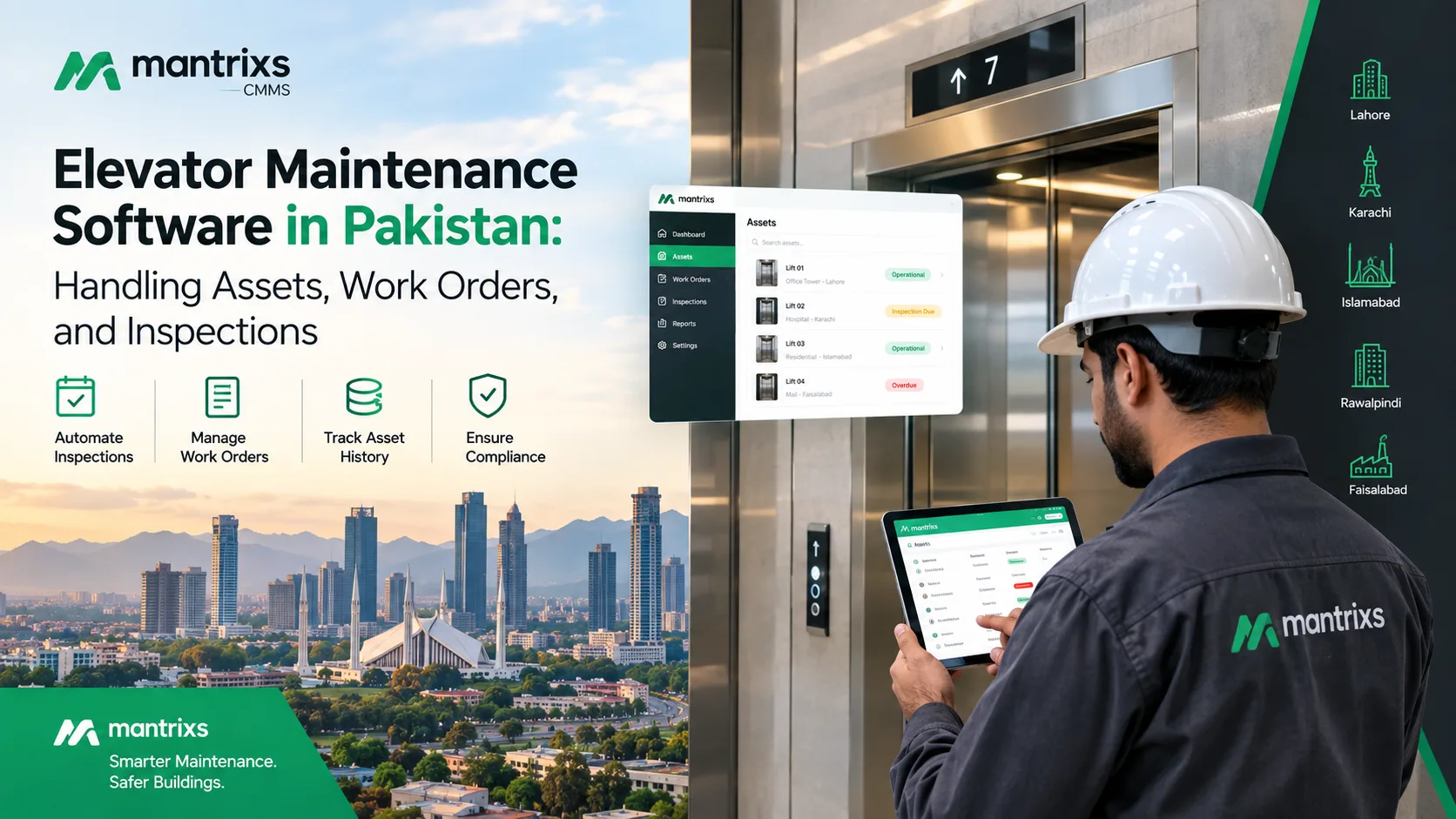
Elevator Maintenance Software in Pakistan: Handling Assets, Work Orders, and Inspections
Discover how elevator maintenance software in Pakistan helps facility teams manage assets, inspections, work orders, maintenance records, and multiple properties.