MTTR
MTTR and MTBF Formula for Asset Management
Still, broken tools can slow things down and use up resources. Mean Time to Repair (MTTR) and Mean Time Between Failures (MTBF) are two important measures to understand in this situation.
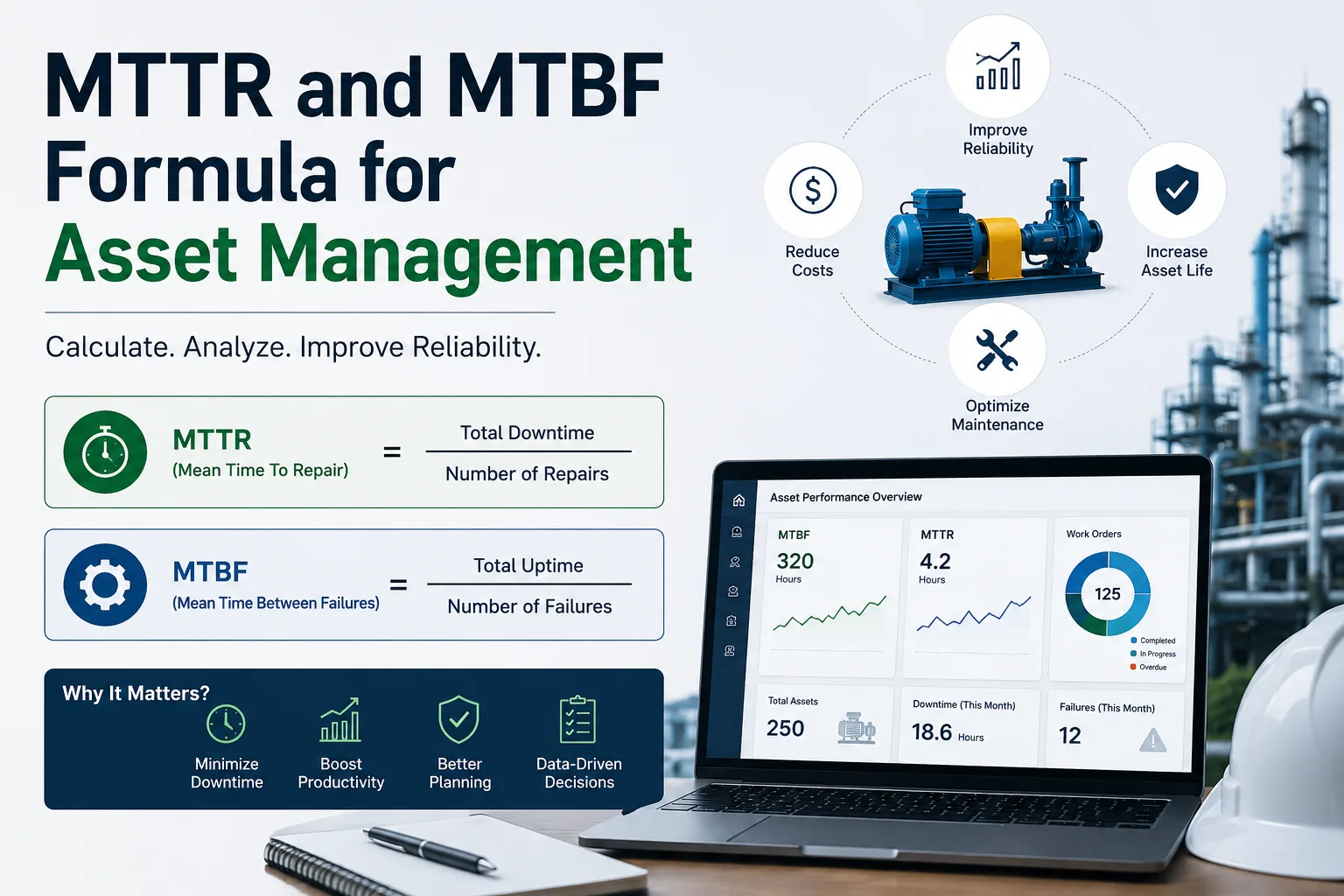
Today's work world moves quickly, so you need to be quick. Businesses depend on their assets to run smoothly. Still, broken tools can slow things down and use up resources. Mean Time to Repair (MTTR) and Mean Time Between Failures (MTBF) are two important measures to understand in this situation. The way you handle your assets could change if you use these two acronyms.
Understanding the MTTR and MTBF formulas not only helps businesses cut down on downtime, but it also makes them more productive. With proper tracking and analysis of these metrics, you can uncover insights that lead to smarter decision-making. Are you ready to learn more about MTTR and MTBF? Let's look at how these formulas can help you handle your assets better!
Understanding MTTR and MTBF
Two very important metrics in asset management are Mean Time to Repair (MTTR) and Mean Time Between Failures (MTBF). They tell us a lot about how reliable equipment is and how to keep it in good shape.
MTTR is a way to figure out how long it usually takes to fix a broken system or part. It covers the whole repair process, from figuring out what's wrong to fixing it. A lower MTTR means that repairs can be done more quickly, which cuts down on downtime and boosts productivity.
On the other hand, MTBF looks at how long an asset works before it breaks down. This metric reflects overall reliability and helps organizations understand their assets' performance over time. The equipment lasts longer and doesn't need to be fixed as often if the MTBF is high.
Businesses can make smart choices about maintenance plans and resource allocation if they understand these metrics. Each is very important for making sure that operations run smoothly and that critical assets are available at all times.
Importance of Tracking MTTR and MTBF
Tracking MTTR (Mean Time to Repair) and MTBF (Mean Time Between Failures) is crucial for any organization that relies on machinery or technology. These metrics give information about how well operations are running and how reliable the system is.
Businesses can find patterns in how their equipment works by keeping an eye on these numbers. Knowing when things break down helps you plan repairs before they happen instead of after the fact.
Better visibility into MTTR and MTBF helps people make decisions based on facts. It allows businesses to allocate resources more effectively, ensuring minimal downtime during repairs or upgrades.
Teams also learn to be accountable when they keep track of things consistently. When employees know what they need to do to keep equipment in good shape, it can lead to better processes and practices all around.
In competitive businesses, optimizing these metrics translates directly into cost savings and improved customer satisfaction. This focus on dependability also builds a stronger reputation for providing good service.
How to Calculate MTTR and MTBF
It is very important for asset management to figure out MTTR (Mean Time to Repair) and MTBF (Mean Time Between Failures).
Divide the total amount of downtime by the number of fixes to get the MTTR. This gives you a clear view of how long it usually takes to restore an asset after a failure.
To find the MTBF, split the total time the system was up and running by the number of times it failed during that time. This metric shows how reliable something is and helps with planning when to do repairs.
For both calculations, you need to collect correct data on repairs and business hours. Consistent tracking makes sure that metrics are accurate, which lets you make better decisions about how to manage your assets.
Utilizing software tools can streamline this process significantly, reducing manual errors and enhancing efficiency in data gathering.
Common Challenges in Implementing MTTR and MTBF
Implementing MTTR and MTBF can be hard for businesses in a number of ways. One major hurdle is the lack of standardized data collection methods. If you don't use consistent metrics, your calculations might not be accurate.
The training of employees is another problem. It's possible that many teams don't fully understand how to track or report downtime correctly. This gap can lead to inaccurate readings and skewed results.
Data divides make things even more difficult. When information is scattered across different systems, it becomes difficult to gather a comprehensive view of asset performance.
Additionally, resistance to change often surfaces during implementation efforts. Employees who are used to doing things the old way may find it hard to adapt to new methods that are based on these metrics.
Integrating advanced technologies for real-time monitoring can be costly and complex, posing yet another barrier for organizations striving to improve their asset management strategies through effective MTTR and MTBF tracking.
Best Practices for Improving MTTR and MTBF
A good way to improve MTTR and MTBF is to train your maintenance team as needed. Knowledgeable staff can quickly diagnose issues, reducing downtime.
Next, implement a robust preventive maintenance schedule. By being proactive, this method helps find possible mistakes before they become big issues.
It is very important to use modern technology. Spend money on monitoring tools that give you data on how your assets are doing in real time. These insights help people make decisions and fix things faster.
Also, encourage teams to talk to each other openly. Sharing information about past failures can lead to creative solutions and prevent similar issues from arising again.
Regularly look at your data. Reviewing MTTR and MTBF on a regular basis will show trends and problem areas that need to be fixed, which will help guide future improvements in the right way.
The Role of Asset Management in Improving MTTR and MTBF
Improving both MTTR and MTBF depends on how well assets are managed. When businesses know exactly what they have, they can spot weak spots before they become major problems.
Breakdowns are less likely to happen when you do maintenance on a regular basis. This proactive approach minimizes downtime, leading to improved mean time to repair (MTTR).
Another important thing is to train your staff. People who are knowledgeable can respond more quickly to incidents, which cuts down on recovery times.
Using technology like predictive analytics can also help you see problems coming before they become costly downtimes. When these strategies are put together, they make a strong framework for keeping the organization's assets at high levels of operational efficiency and reliability.
Conclusion
Anyone in a business that wants to improve its asset management must understand MTTR and MTBF. These metrics provide insights into equipment reliability and maintenance efficiency, which are essential for minimizing downtime and maximizing productivity.
Tracking MTTR (Mean Time to Repair) and MTBF (Mean Time Between Failures) can make a big difference in how well your business runs. When organizations watch these metrics closely, they gain a clearer picture of their assets' health. Teams can use this information to make smart choices that improve both safety and service levels.
To figure out MTTR, you have to find the average amount of time it takes to fix an asset after it breaks. Add up all the repair times over a certain time period and divide by the number of repairs done during that period. On the other hand, determining MTBF requires calculating the average time between failures during operation hours and simply dividing total operating time by the number of failures within that same period.
Implementing these formulas isn't always straightforward. Organizations may face challenges such as inconsistent data collection or resistance from team members who don't see instant benefits. Getting rid of these problems as soon as possible is essential for integrating into existing processes that work.
To improve your organization's MTTR and MTBF figures, consider adopting best practices like regular training sessions for maintenance staff or employing advanced predictive maintenance technologies. Additionally, fostering open communication across departments can lead to more effective strategies tailored specifically to your unique operational needs.
Asset management plays a pivotal role in enhancing both metrics by ensuring resources are allocated efficiently while establishing clear protocols around monitoring equipment performance over time. Companies can find big ways to improve by putting an emphasis on thorough analysis in this area.
Understanding these important formulas is the key to getting assets that work better. The mttr and mtbf formulas are more than just numbers; they're also strategic indicators that help people at all levels of an organization make better decisions.
Keep reading
More from the Mantrix blog

Best Inventory Management Software for Maintenance Teams in Pakistan
Discover the best inventory management software for maintenance teams in Pakistan. Track spare parts, stock levels, usage, and reduce equipment downtime.

Best Hospital Maintenance Software in Pakistan for Facility Managers
Discover the best hospital maintenance management software in Pakistan. Reduce equipment downtime, ensure compliance, and streamline facility maintenance.

What Is Overall Operations Effectiveness (OOE)? Definition, Benefits, Metrics & Best Practices
Overall Operations Effectiveness (OOE) helps businesses improve efficiency, productivity, and operational performance. Learn about OOE, its benefits, key metrics, best practices, and how companies can use it to reduce waste and achieve better results.