5 Ways Preventive Maintenance Cuts Machine Downtime in Pakistan
Preventive maintenance (PM) is a reliable and organized way to do regular repair on equipment. Instead of waiting for a machine to break down completely, a PM plan includes regular checks, maintenance, and repair of parts.
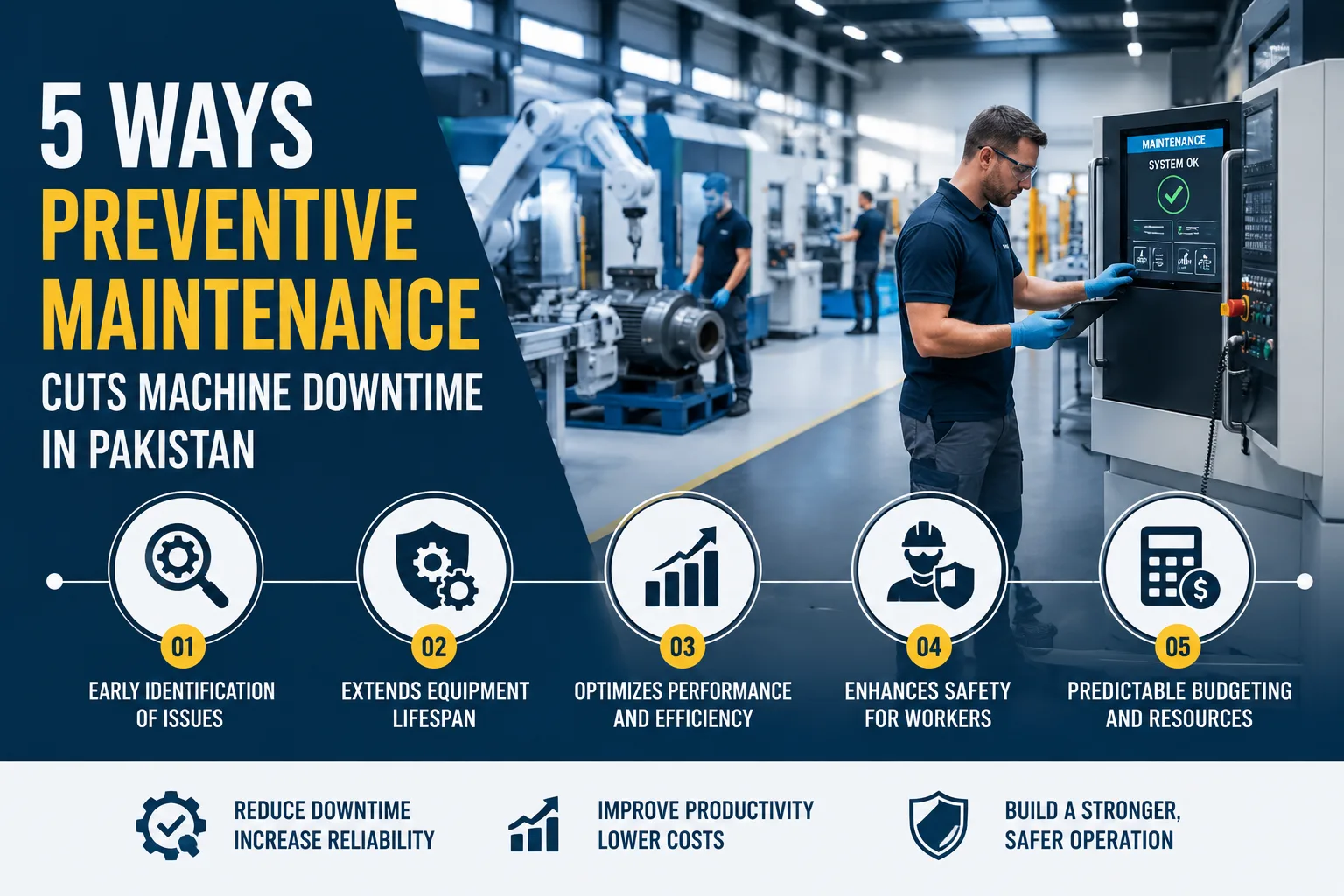
Pakistani businesses have to deal with a unique set of problems, such as power outages that happen all the time and extreme summer temperatures that put big equipment to the test. When an important piece of machinery breaks down in a plant in Faisalabad or Karachi, the money clock starts to run. Every minute that production is stopped costs money, delays important shipments, and hurts relationships with clients in and outside of the country.
Preventive maintenance (PM) is a reliable and organized way to do regular repair on equipment. Instead of waiting for a machine to break down completely, a PM plan includes regular checks, maintenance, and repair of parts. This kind of planned maintenance is meant to keep machines running smoothly and find small problems before they become big problems.
People who run factories, plants, or businesses need to stop being reactive and start being proactive. A good preventive maintenance plan is important for keeping your business highly competitive, minimizing downtime, and increasing working efficiency with the help of a modern CMMS system. This proactive method protects your bottom line and cuts down on machine downtime in five specific ways.
1. Early Identification of Troublesome Conditions
One of the best things about preventive upkeep is that it helps find problems before they get too bad. Maintenance workers can check on the condition of equipment while it is still running or when it is shut down for short periods of time every so often during ongoing inspections.
Keeping an eye on your gear on a daily basis will help you quickly spot simple issues like normal wear and tear that might not be obvious otherwise. For example, a small oil leak or a drive belt that is a little worn won't be able to stop work today, but they will next week. If these problems are found early, your team can order the parts they need and schedule a repair for a time when they are not working.
Checking fluid levels, looking at structural parts for tiny cracks, and using diagnostic tools to keep an eye on strange machine noises are all common ways to find problems early. In high-demand fields like Pakistan's textile and cement industries, finding a misaligned motor early on can save a lot of money by preventing the need for costly fixes and lost production time.
2. Extending Equipment Lifespan and Reliability
Industrial equipment is a big investment in terms of money. To get the most out of this purchase, the equipment needs to work well for as many years as possible. Planned, regular repair helps keep expensive internal parts from breaking down too soon.
When parts are left to break down, they often put more stress on systems that are related to them. If a bearing fails, it could destroy the whole gearbox. You can guard the bigger, more expensive assembly by replacing the bearing on a regular basis. This safety that builds on top of itself makes equipment much healthier and lasts longer.
Regularly lubricating moving parts, deep cleaning heat sinks and ventilation areas, and carefully calibrating sensitive instruments are all routine tasks that can increase the life of an item.
In places with a lot of dust and changing temperatures, making sure that the filters are clean and the moving parts are well oiled will help your machines last through the rough conditions without breaking down too soon.
3. Optimizing Performance and Efficiency
Machinery that isn't taken care of properly will simply stop working as well over time. To get the most out of this purchase, the equipment needs to work well for as many years as possible. Planned, regular repair helps keep expensive internal parts from breaking down too soon.
When parts are left to break down, they often put more stress on systems that are related to them. If a bearing fails, it could destroy the whole gearbox. You can guard the bigger, more expensive assembly by replacing the bearing on a regular basis. This safety that builds on top of itself makes equipment much healthier and lasts longer.
Regularly lubricating moving parts, deep cleaning heat sinks and ventilation areas, and carefully calibrating sensitive instruments are all routine tasks that can increase the life of an item.
Filters get clogged, parts get out of place, and motors have to work harder to make the same amount of power. When you take care of your machines, they work at their best, which means you can regularly meet your production goals without using too much energy.
This is especially important for companies in Pakistan that have to deal with high energy costs. When a machine works well, it uses less fuel and electricity. Cutting down on energy use not only lowers your monthly bills, but it also keeps your internal motors and power sources in better shape.
Tuning engines, replacing dirty air and hydraulic filters, and adjusting mechanical settings to factory specs are all parts of preventive maintenance that improve efficiency. When your equipment works exactly the way the maker intended, cycle times are shorter, product quality is higher, and operational waste is greatly reduced.
4. Enhanced Safety for Workers
Machine slowdown isn't always caused by broken parts. To get the most out of this purchase, the equipment needs to work well for as many years as possible. Planned, regular repair helps keep expensive internal parts from breaking down too soon.
When parts are left to break down, they often put more stress on systems that are related to them. If a bearing fails, it could destroy the whole gearbox. You can guard the bigger, more expensive assembly by replacing the bearing on a regular basis. This safety that builds on top of itself makes equipment much healthier and lasts longer.
Regularly lubricating moving parts, deep cleaning heat sinks and ventilation areas, and carefully calibrating sensitive instruments are all routine tasks that can increase the life of an item.
Accidents and safety incidents at work can lead to instant and long-term shutdowns while investigations are done and hazards are removed. Physical dangers can be found and fixed before they do damage with the help of preventive maintenance.
The chance of a terrible accident happening is greatly reduced when safety guards are properly attached, electrical systems are properly grounded, and pressure vessels are tried to the fullest. When workers are safe, they get hurt less often, which means that production stops less often when they weren't supposed to.
As part of a PM program, it is important to check the emergency stop buttons, the electrical insulation, the hydraulic lines for bulging, and the safety interlocks to make sure they all work right. Not only is it the law and the right thing to do to protect your employees, it's also essential for keeping production going nonstop.
5. Predictable Budgeting and Resource Allocation
It is well known that reactive upkeep costs a lot. To get the most out of this purchase, the equipment needs to work well for as many years as possible. Planned, regular repair helps keep expensive internal parts from breaking down too soon.
When parts are left to break down, they often put more stress on systems that are related to them. If a bearing fails, it could destroy the whole gearbox. You can guard the bigger, more expensive assembly by replacing the bearing on a regular basis. This safety that builds on top of itself makes equipment much healthier and lasts longer.
Regularly lubricating moving parts, deep cleaning heat sinks and ventilation areas, and carefully calibrating sensitive instruments are all routine tasks that can increase the life of an item.
For emergency repairs, spare parts often need to be shipped quickly, techs have to work extra hours for high pay, and production lines have to be stopped, which is a huge hidden cost. When you do preventive maintenance, you switch from spending money on things that come up out of the blue to planning ahead of time.
You can make a good estimate of your maintenance budget if you know exactly what jobs need to be done over the next twelve months. You escape the shock of getting huge repair bills out of the blue. This level of consistency helps business owners better distribute resources throughout the company.
A schedule that can be predicted also makes it easier to plan for workers and inventory. You can order extra parts ahead of time to get better prices and make sure they are in the warehouse at the right time. You can also plan maintenance work for vacations, off-shifts, or planned load shedding times, so these important tasks never get in the way of your main production hours.
Implementing an Effective Preventive Maintenance Program
To switch to a proactive maintenance approach, you need to plan carefully and get support from the top. To get the most out of this purchase, the equipment needs to work well for as many years as possible. Planned, regular repair helps keep expensive internal parts from breaking down too soon.
When parts are left to break down, they often put more stress on systems that are related to them. If a bearing fails, it could destroy the whole gearbox. You can guard the bigger, more expensive assembly by replacing the bearing on a regular basis. This safety that builds on top of itself makes equipment much healthier and lasts longer.
Regularly lubricating moving parts, deep cleaning heat sinks and ventilation areas, and carefully calibrating sensitive instruments are all routine tasks that can increase the life of an item.
The first step is to make a full list of all the assets. You need a full list of all the machines in your building, including their make, model, age, and history of repairs.
Once you have this information, you can make a maintenance plan based on what the manufacturer suggests and what your business needs to run. Technology is a very important part of this process. By using Computerized Maintenance Management System (CMMS) software, you can automate work orders, keep track of your spare parts inventory, and keep detailed records of all maintenance tasks that have been done in the past.
Lastly, a strong attitude of maintenance is important for a PM program to work. Technicians and operators need to be properly trained not only to fix broken machines but also to know how important it is to keep them in good shape. When everyone on your team understands that repair is an investment, not a cost, the program will work really well.
Securing Your Industrial Future
Modern factories use preventive maintenance a lot because it works so well. To get the most out of this purchase, the equipment needs to work well for as many years as possible. Planned, regular repair helps keep expensive internal parts from breaking down too soon.
When parts are left to break down, they often put more stress on systems that are related to them. If a bearing fails, it could destroy the whole gearbox. You can guard the bigger, more expensive assembly by replacing the bearing on a regular basis. This safety that builds on top of itself makes equipment much healthier and lasts longer.
Regularly lubricating moving parts, deep cleaning heat sinks and ventilation areas, and carefully calibrating sensitive instruments are all routine tasks that can increase the life of an item.
A structured PM program greatly lowers machine downtime by helping to find problems early, making equipment last longer, improving worker safety, increasing performance, and making budgeting more reliable.
For the manufacturing sector in Pakistan, where margins can be tight and external challenges are numerous, depending on equipment to simply "keep working" is no longer a viable strategy. Maintaining your equipment is worth a lot more in the long run than the costs of scheduling and staff in the short term. This gives you a clear edge over your competitors and guarantees that you can always send high-quality goods on time.
Do what you need to do right now to look at how you're maintaining your property. Talk to experts on reliability, buy up-to-date tools for keeping track of maintenance, and start writing a detailed plan for preventative maintenance to protect your business's future.
Keep reading
More from the Mantrix blog

Parking Lot Maintenance: Save Money with Preventive Care
A proactive parking lot maintenance strategy helps prevent potholes, cracks, drainage issues, and costly repairs. This guide explains preventive maintenance, common parking lot problems,
Agtech Farm Equipment Maintenance: Common Challenges and How to Solve Them
Farm equipment maintenance is becoming more complex as modern machinery evolves. Learn how digital maintenance systems, preventive scheduling, and agtech solutions can reduce downtime and improve equipment reliability.
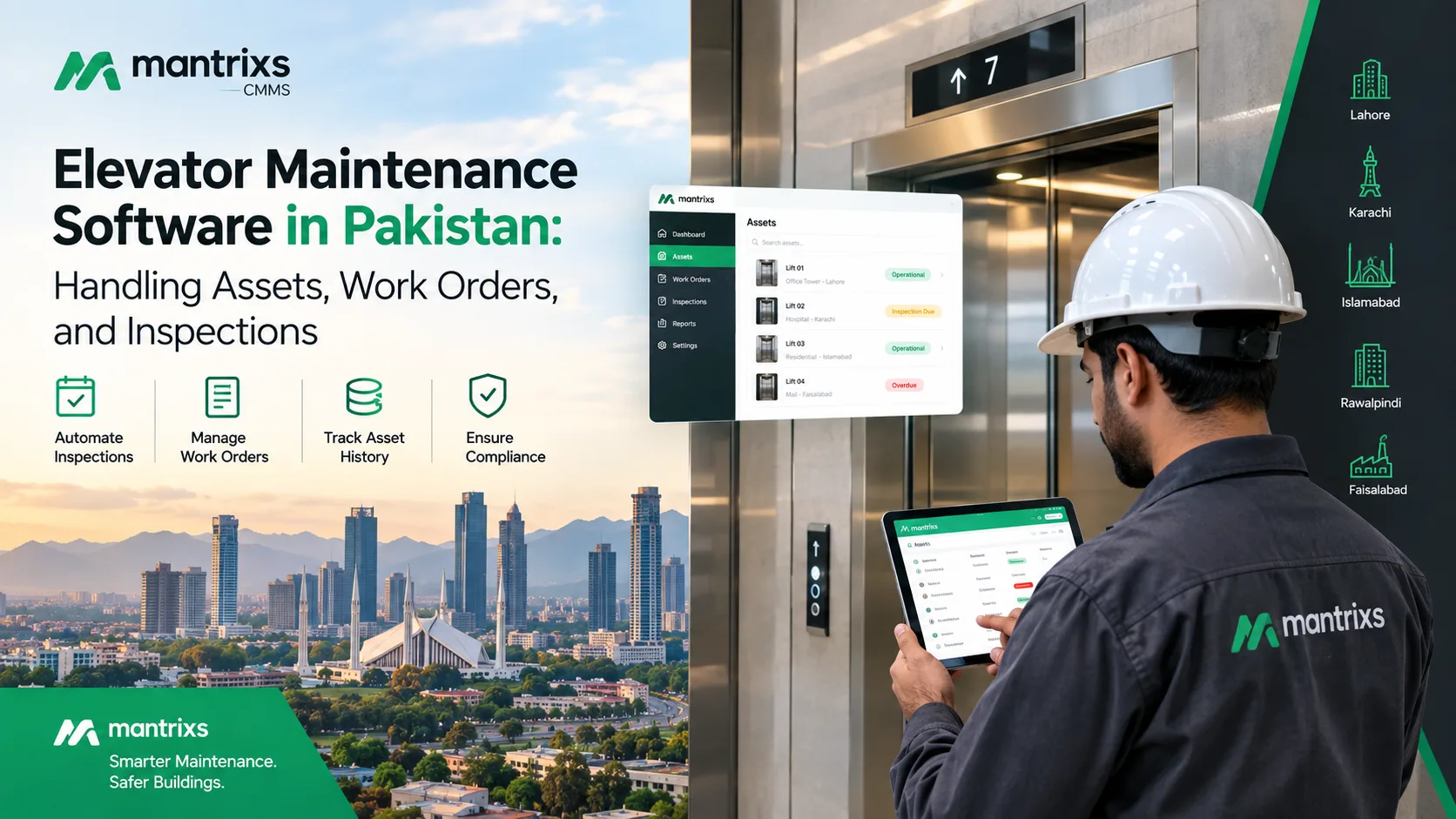
Elevator Maintenance Software in Pakistan: Handling Assets, Work Orders, and Inspections
Discover how elevator maintenance software in Pakistan helps facility teams manage assets, inspections, work orders, maintenance records, and multiple properties.