Agtech Farm Equipment Maintenance: Common Challenges and How to Solve Them
Farm equipment maintenance is becoming more complex as modern machinery evolves. Learn how digital maintenance systems, preventive scheduling, and agtech solutions can reduce downtime and improve equipment reliability.
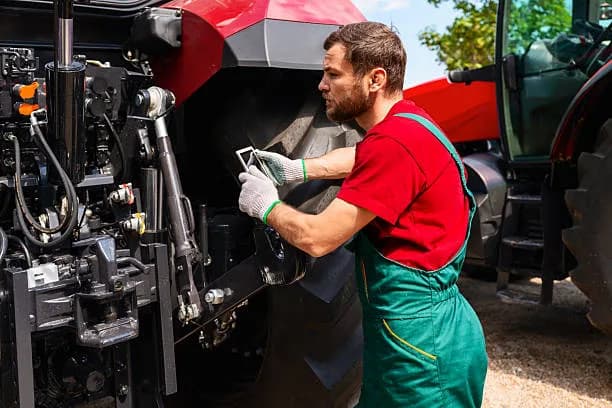
The last ten years have seen more changes in farming than the previous fifty years put together. These days, mid-to-large enterprises frequently use GPS-guided tractors, sensor-equipped irrigation systems, autonomous harvesters, and drone-based crop monitoring. However, upkeep is one area of the farm that hasn't adapted to this change.
The majority of farms continue to operate extremely sophisticated equipment using antiquated maintenance practices, such as memory-based scheduling, paper logs, and reactive repairs. Every season, farmers are silently losing time, money, and produce due to this mismatch between intelligent machinery and manual procedures. Closing that gap has emerged as one of the most neglected agtech opportunities as 2026 draws to a close.
The most prevalent maintenance issues that farms currently deal with are broken down below, along with doable solutions provided by agtech.
1. Manual Tracking Leads to Missed Maintenance
Things are unavoidably overlooked when service schedules are kept in a notebook, a whiteboard, or a farmer's memory. It doesn't seem important to skip a grease point here or change the oil late there until the machine breaks down at the worst possible moment.
The solution: Based on engine hours, mileage, or calendar intervals, digital maintenance tracking even a simple farm CMMS (Computerized Maintenance Management System) automatically highlights impending repair. There is no need for someone to remember to check.
2. Equipment Downtime During Critical Windows
Farming has strict, harsh deadlines. A malfunction that occurs during planting or harvesting can cost an entire season's yield in addition to a repair price. The majority of the time, manual maintenance is reactive; when something breaks, it is fixed.
The solution: Sensor data and usage trends are increasingly being used by Agtech platforms to identify wear prior to failure. Farmers should plan servicing during slower times rather than rushing during harvest, preventing downtime when it counts most.
3. Scattered Records Across Multiple Machines and Fields
A mid-sized business may operate twelve or more machines in multiple fields, each of which is serviced at different times by various personnel. Maintenance records become dispersed throughout notebooks, vehicles, and people's memories in the absence of a central system.
The solution: Each machine's service history, part replacements, and inspection notes are linked to a single profile through a centralized digital record. Instead of calling around to piece it together, any team member may quickly see a complete maintenance history.
4. Difficulty Justifying Repair vs. Replace Decisions
It's difficult to determine whether an aged machine has to be retired or needs another repair without a solid maintenance history. This choice is far too frequently made based on intuition rather than facts.
The solution: Farmers can analyze overall maintenance costs, breakdown frequency, and depreciation over time with consistent digital records, transforming an estimate into a data-driven decision that safeguards the bottom line.
5. Limited Connectivity in Rural and Remote Areas
Cloud-only tools are unreliable in the field since many farms operate in places with poor cellphone or internet service. This continues to be one of the key practical obstacles to the use of agtech in maintenance management.
The solution: In order to prevent crews from being hindered by dead zones, most recent agtech maintenance solutions are designed offline. Initially, data is recorded locally on a device in the field and syncs automatically once a connection is available.
6. Staff Turnover and Inconsistent Practices
Farm labor is frequently cyclical or seasonal. When one skilled operator is the only one with maintenance knowledge, that information disappears as soon as they do.
The solution: Regardless of who is performing the task, standardized digital checklists and maintenance workflows make it simple to swiftly onboard new employees and guaranty that every equipment is serviced uniformly.
7. Rising Equipment Costs Make Neglect Expensive
The cost of replacing machinery increases as it becomes more sophisticated. A GPS-guided autonomous system may require a five-figure part, but basic equipment may just require a small repair if a service is neglected.
The solution: Agtech platforms' built-in preventive maintenance safeguards that investment. Frequent, monitored maintenance prolongs the life of equipment and maintains its future resale value.
The Bigger Picture: Moving from Manual to Managed
All of these difficulties have one thing in common: manual maintenance procedures were never intended to handle the complexity of contemporary farm operations. The systems that control the equipment must also get more intelligent as it becomes more sophisticated.
These issues are immediately addressed by agtech-driven maintenance solutions, such as a specialized agricultural CMMS, an equipment management app, or a more comprehensive farm management platform with integrated maintenance modules.
Automating scheduling and reminders for maintenance
Centralizing data across devices and places
Making predicted repairs possible instead than reactive ones
Encouraging offline usage in places with poor connection
Standardizing procedures for all employees and seasons
By making this change, farms are not only preventing malfunctions but also decreasing downtime during crucial windows, prolonging equipment life, and making more informed capital decisions based on actual facts rather than conjecture.
As we move further into 2026, the farms that adapt their maintenance approach alongside their equipment will be the ones best positioned to handle rising costs, labor shortages, and increasingly complex machinery. Understanding the agtech farm equipment maintenance manual tasks pain points 2026 is the first step toward building a smarter, more reliable maintenance strategy for the seasons ahead.
Keep reading
More from the Mantrix blog
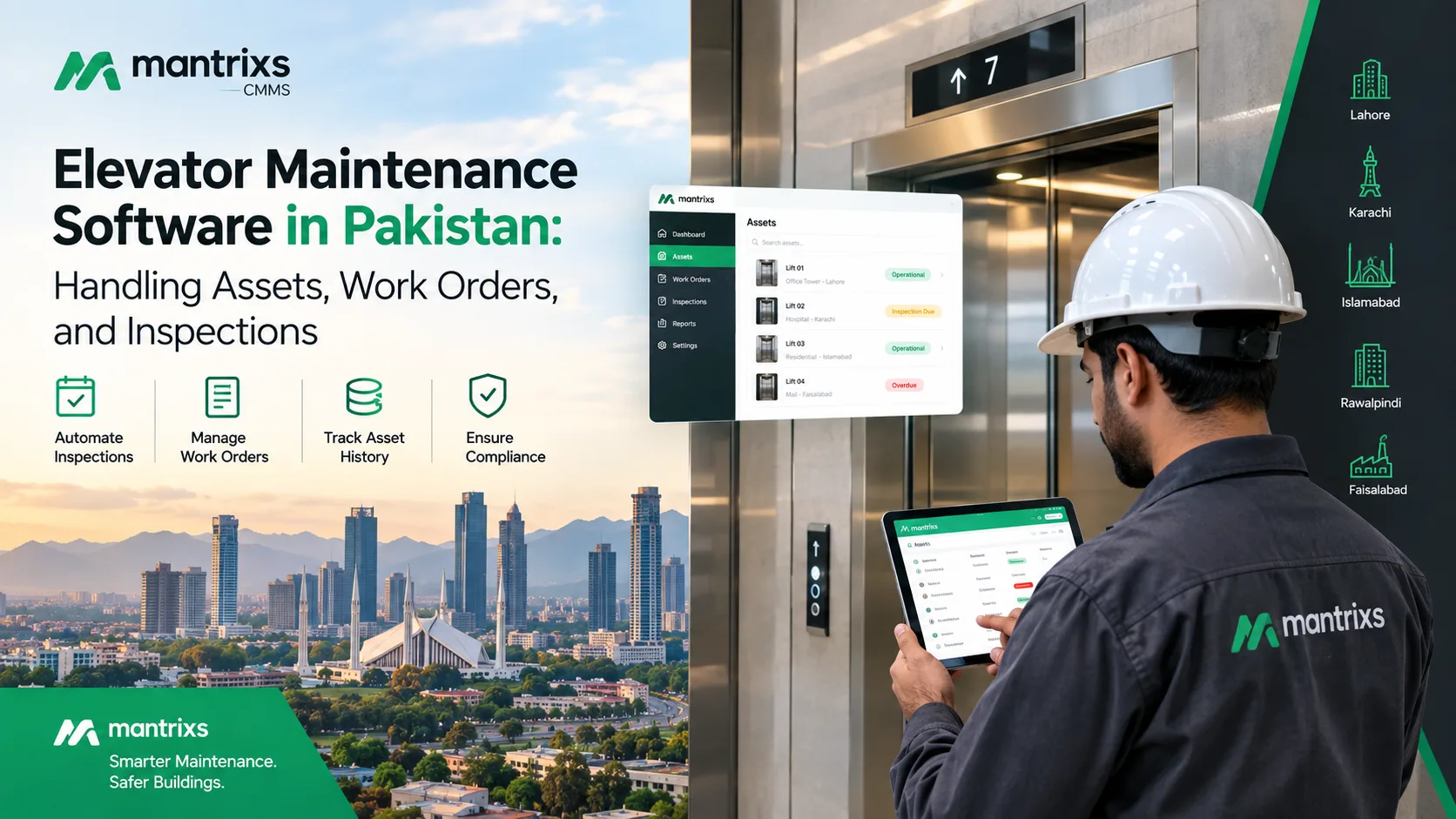
Elevator Maintenance Software in Pakistan: Handling Assets, Work Orders, and Inspections
Discover how elevator maintenance software in Pakistan helps facility teams manage assets, inspections, work orders, maintenance records, and multiple properties.
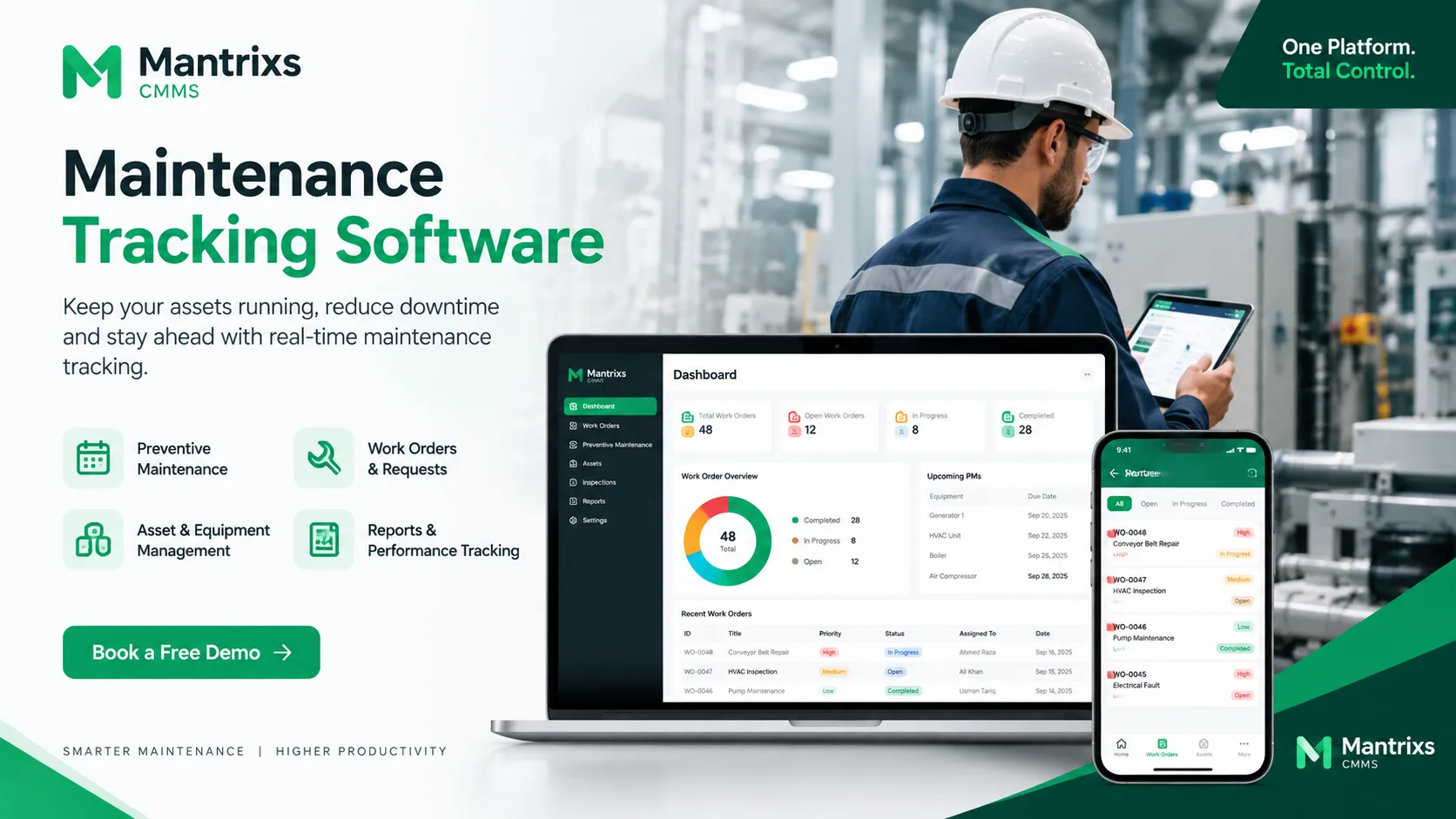
Maintenance Tracking Software: How to Track Work Orders, Assets & Maintenance History
Discover how maintenance tracking software helps businesses organize work orders, manage assets, track maintenance history, and improve overall maintenance efficiency.
How Corrective Maintenance Software Reduces Downtime for Pakistani Factories
Corrective maintenance software helps Pakistani factories reduce unplanned downtime by speeding up fault reporting, work order management, and repair response.