Maintenance Tracking Software
Maintenance Tracking Software: How to Track Work Orders, Assets & Maintenance History
Discover how maintenance tracking software helps businesses organize work orders, manage assets, track maintenance history, and improve overall maintenance efficiency.
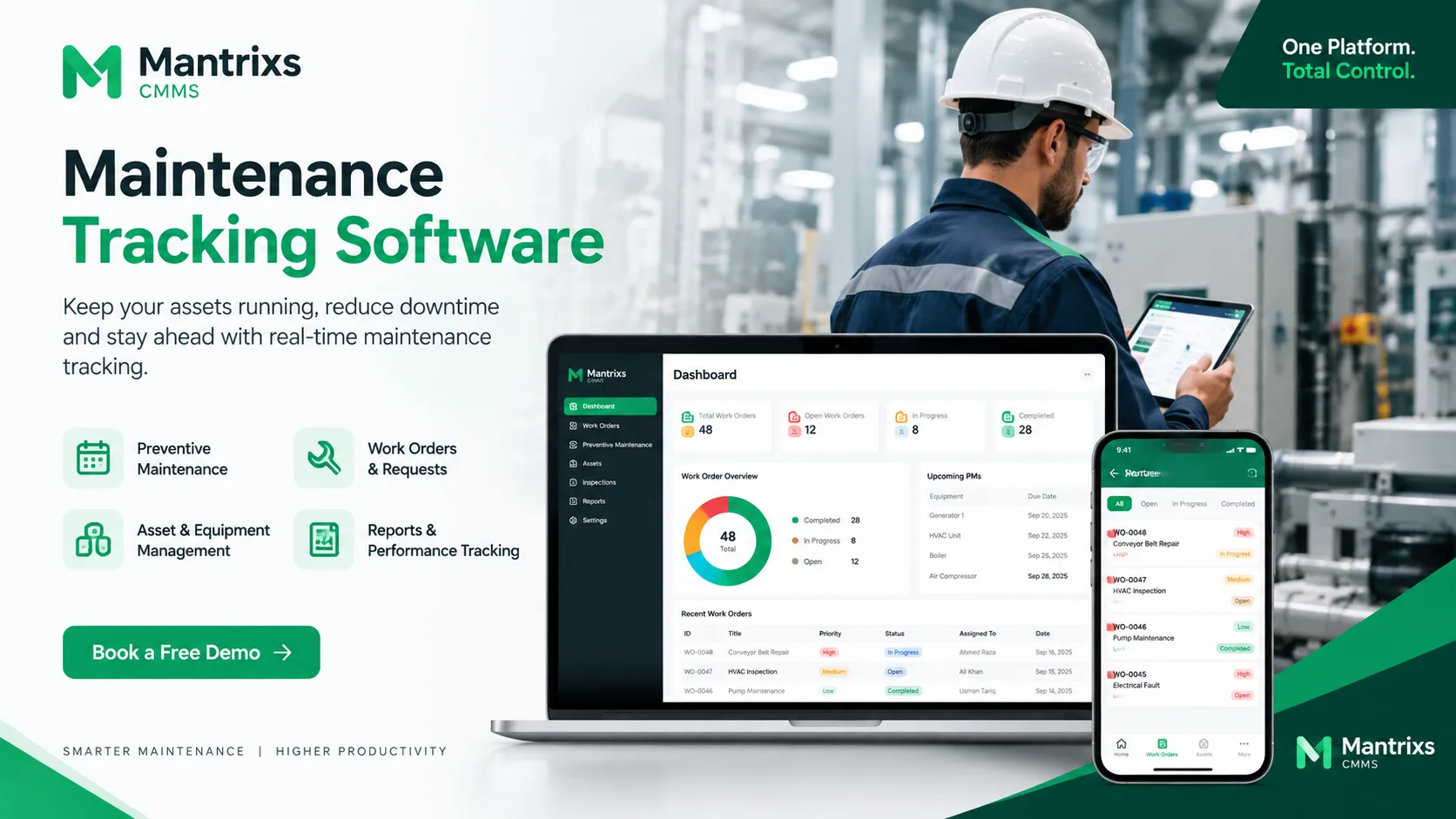
Imagine a world without the disarray of paper trails or dispersed spreadsheets, where maintenance duties are completed efficiently, assets are simply tracked, and work orders are arranged. Does that sound like a dream? It's not required to be. You may completely change how your company handles its maintenance and resources with the correct maintenance tracking software.
In today's fast-paced environment, efficiency is crucial. Having a reliable system for tracking maintenance is crucial whether you run a manufacturing facility, oversee fleet operations, or manage buildings. It guaranties the longevity of your assets in addition to increasing production. Let's examine the importance of maintenance tracking software and how it may transform your work order processing and asset management strategies.
The Importance of Maintenance Tracking Software
For any firm that depends on facilities and equipment, maintenance tracking software is essential. It offers a methodical approach to task management, assisting teams in maintaining concentration and organization.
This program drastically lowers downtime by optimizing maintenance procedures. When issues are resolved quickly, operations continue uninterrupted. This prolongs the life of your assets and maintains excellent output.
Asset performance trends over time can be found in data gathered by maintenance tracking software. Businesses can make well-informed judgments about replacements or upgrades before expensive failures happen by analyzing this data.
Understanding Work Orders and Assets
The essential documents that direct maintenance operations are work orders. They give duties, specify tasks, and establish deadlines. They guarantee efficient upkeep when they are administered well.
The machinery or equipment that a business uses to run its activities is referred to as an asset. These can include HVAC systems and industrial machinery. For best results, it is essential to comprehend the requirements and state of each asset.
In maintenance tracking software, the connection between assets and work orders is crucial. Organizations can prioritize tasks according to asset importance and urgency by connecting them.
Better resource allocation is made possible by keeping track of both components. Teams can concentrate their efforts where they are most important, increasing output and decreasing downtime. This synergy optimizes operating efficiency across multiple departments while also preserving the lifespan of assets.
Benefits of Using Maintenance Tracking Software
Operations are greatly streamlined by using maintenance tracking software. Teams may concentrate on more crucial work by automating time-consuming processes.
Increased visibility is one significant benefit. You can efficiently prioritize work orders and promptly discover problems when you have access to real-time data. This proactive strategy reduces downtime.
It also encourages improved team member communication. Collaboration is improved since everyone is kept up to date on asset status and necessary maintenance tasks.
Another important advantage is cost savings. Organizations can prolong asset lifespans and avoid expensive repairs by adhering to regular maintenance programs.
Capabilities for data analytics offer insightful information about performance trends over time. Making educated decisions about the distribution of resources and upcoming infrastructure or equipment purchases is made easier with the use of this information.
Types of Maintenance Tracking Software
There are several types of maintenance tracking software, each designed to meet particular requirements.
Computerized Maintenance Management Systems, or CMMS, are widely used in businesses that depend significantly on machinery and equipment. It easily tracks asset history, plans preventative maintenance, and assists with work order management.
By combining financial management with maintenance procedures, EAM (Enterprise Asset Management) goes one step further. In addition to keeping an eye on assets, this kind assesses how well they function in relation to company objectives.
Mobile maintenance tracking apps provide flexibility for people working in the field service industry. Technicians may view manuals directly from their devices, report problems promptly, and receive updates while on the go.
Additionally, cloud-based solutions are becoming more popular. Through automated backups, they guarantee data protection while offering scalability and remote access.
The size of your company, the intricacy of its processes, and its particular maintenance needs all influence the choice of software.
Features to Look for in a Good Maintenance Tracking Software
Take user-friendliness into account when choosing maintenance tracking software. Your staff will accept it more quickly and navigate it more easily with an intuitive UI.
Seek out strong reporting features. You may monitor asset performance patterns and pinpoint areas that require attention with the aid of detailed reports.
Another important element is integration options. Data silos are eliminated and efficiency is increased through seamless interactions with current systems.
Set personalized alerts as a top priority. Notifications that are sent out on time guarantee that crucial activities are not missed, allowing your business to function without constant supervision.
How to Implement a Maintenance Tracking System
Determining your unique needs is the first step in putting a maintenance tracking system into place. Involve stakeholders from various departments to learn what features they need.
Next, select the appropriate program to meet those requirements. Seek out choices that are easy to use and fit into current workflows.
Once chosen, adapt the software to the procedures used by your company. This could entail defining work order types or creating asset classifications.
Adoption success depends on training. Organize training sessions to help team members become proficient users of the system.
Following implementation, keep an eye on usage and routinely gather feedback. This will enable you to identify areas that want improvement and guarantee that the system changes as your business does.
Establish procedures for updating maintenance histories and entering data. Maintaining consistency in these procedures will improve performance tracking's accuracy and dependability over time.
Conclusion
In today's operations, maintenance tracking software is essential for efficiently managing assets and work orders. Organizations may reduce downtime and optimize their processes by realizing how important it is to document maintenance history.
The benefits of using such software are obvious: increased productivity, better resource management, and the capacity to foresee maintenance requirements before they become expensive repairs. There are several varieties on the market, so it's critical to select one that meets your unique needs.
Features like user-friendliness, mobile access, reporting tools, and integration capabilities should be taken into account when choosing a maintenance monitoring system. These components will guarantee that you not only successfully construct the system but also fully utilize its features.
Careful planning and execution are necessary to establish a reliable maintenance tracking system. Evaluate existing workflows and pinpoint areas that need improvement first. Once the new system is operational, improved adoption rates are fostered by including team members throughout this process.
Businesses may keep ahead in the fast-paced world of today by adopting maintenance tracking software. It provides many advantages that, over time, keep expenses under control and greatly contribute to operational success. Using this technology shows a dedication to overall company productivity and asset management excellence.
Keep reading
More from the Mantrix blog
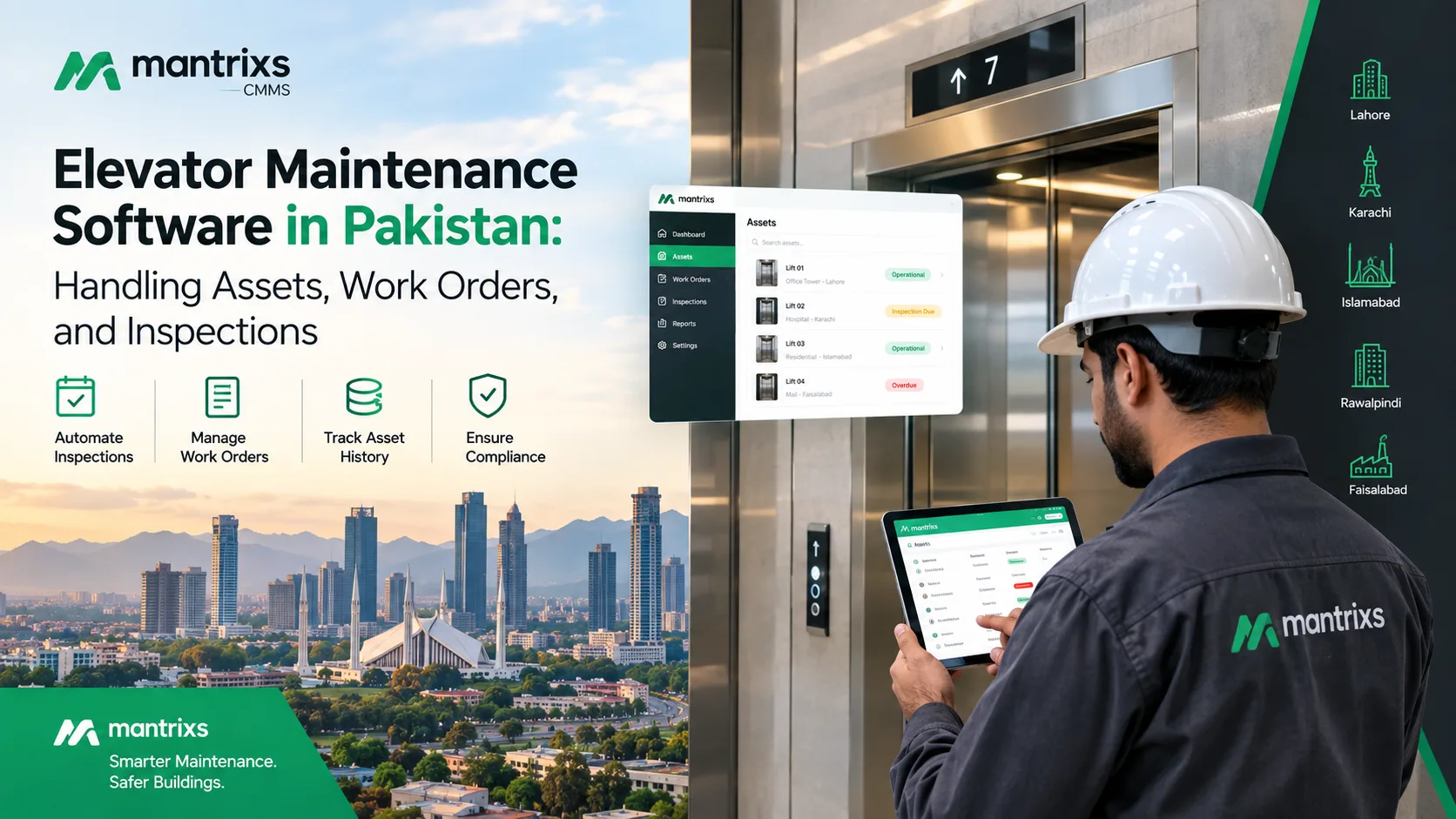
Elevator Maintenance Software in Pakistan: Handling Assets, Work Orders, and Inspections
Discover how elevator maintenance software in Pakistan helps facility teams manage assets, inspections, work orders, maintenance records, and multiple properties.

How Corrective Maintenance Software Reduces Downtime for Pakistani Factories
Corrective maintenance software helps Pakistani factories reduce unplanned downtime by speeding up fault reporting, work order management, and repair response.

Best Retail Store Maintenance Software in Pakistan
Retail chains in Pakistan need a reliable way to manage maintenance across multiple stores. Discover how retail store maintenance software helps track work orders, manage vendors, schedule preventive maintenance, and reduce downtime with Mantrixs.