Oil & Gas Operations
CMMS for Oil & Gas Industry: Improve Asset Reliability, Reduce Downtime, and Enhance Safety
The oil and gas industry runs on precision. A single unplanned failure of equipment on an offshore platform or pipeline network can stop production and cost operators anywhere from $100,000 to several million dollars
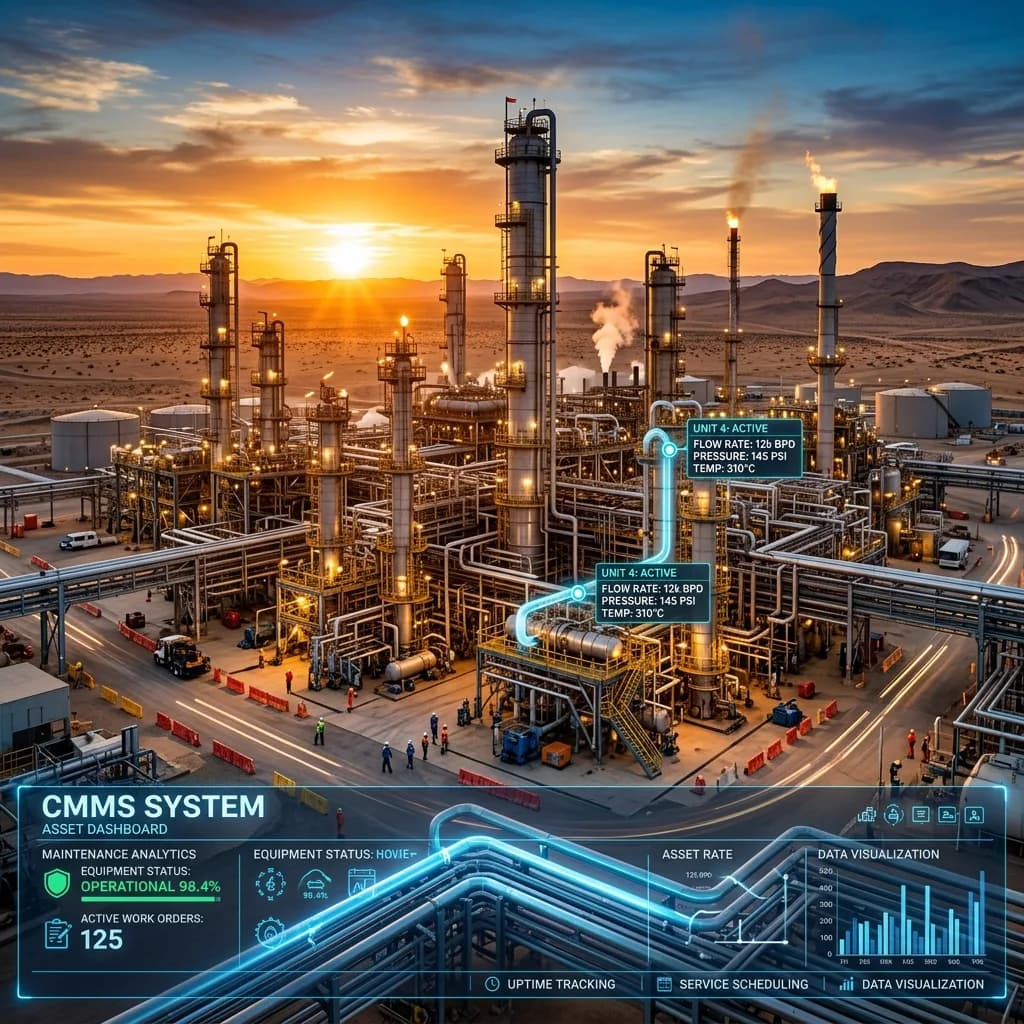
A Computerized upkeep Management System (CMMS) helps oil and gas companies keep their equipment in good shape, follow safety rules, and lower their upkeep costs by 25–35%. For an industry where unplanned downtime can cost millions per day, CMMS is no longer optional in its operational infrastructure.
The oil and gas industry runs on precision. A single unplanned failure of equipment on an offshore platform or pipeline network can stop production and cost operators anywhere from $100,000 to several million dollars per day in lost profits, repairs, and fines from the government. Add aging infrastructure, tightening environmental laws, and a global push for operational efficiency, and the pressure on maintenance teams has never been greater.
Computerized Maintenance Management Systems (CMMS) have become one of the best ways to deal with these problems. CMMS tools help oil and gas companies see and manage their assets and teams more easily by digitizing and automating maintenance tasks. This keeps costs low and teams safe.
This article explains in detail how CMMS works in the oil and gas industry, why it's important, and what you should look for in a tool that's right for your business.
What Is a CMMS and Why Does It Matter for Oil & Gas?
A CMMS is a piece of software that helps a company plan, schedule, keep track of, and report on maintenance tasks for all of its physical assets. At its core, it gets rid of manual spreadsheets and split workflows, replacing them with a single, organized system that operations managers and maintenance teams can depend on.
For oil and gas operators, this matters enormously. Some of the world's most complicated and dangerous machines are run by this industry. These include wellheads, compressors, pressure vessels, pipelines, and rotating machinery. To keep them safe and working well, they all need to be maintained according to strict rules.
Industry research shows that when companies use CMMS platforms, they consistently report a 25–35% drop in maintenance costs and equipment downtime. That's not a minor gain. These percentages mean that big businesses can save tens of millions of dollars every year.
Beyond cost, governmental compliance is a non-negotiable driver. CMMS platforms create the documentation trails that regulatory bodies such as OSHA, the EPA, and API require making audits faster and compliance more defensible.
Why CMMS is Important for Oil and Gas Operations
Predictive Maintenance: Catching Failures Before They Happen
The most expensive way to run an oil and gas business is to fix broken equipment after it happens. With CMMS platforms, companies move toward predictive and preventive maintenance models. In these models, equipment is serviced based on its actual condition data and usage history instead of failure events or schedules.
This method cuts down on unplanned shutdowns, increases the life of assets, and gives maintenance teams more control over their budget and task.
Safety Compliance: Maintaining Accurate Inspection Records
Oil and gas companies have to go through a lot of inspections. There are thorough records of every inspection, repair, and service event kept by CMMS platforms. These records are organized by asset, date, technician, and compliance standard. This paperwork is very important for showing OSHA, EPA, or API auditors that you follow the rules.
Asset Lifecycle Management: Optimizing Equipment Replacement
All equipment has a time when it needs to be replaced. CMMS platforms keep track of all of an asset's maintenance history. This gives operations managers the information they need to decide whether to repair or replace an asset. Over time, this lowers capital costs by keeping old equipment from being used past its safe working window and avoiding having to buy new ones too soon.
Inventory Optimization: Reducing Spare Parts Costs
Having too much goods on hand wastes money. If you don't carry enough, repairs could cause production to be held up. CMMS platforms connect inventory management with maintenance workflows directly, so spare parts are bought based on real maintenance schedules instead of guesses. The result is inventory management that is smaller and saves money.
Labor Efficiency: Streamlining Work Orders and Technician Productivity
Work orders that are written on paper slow things down. CMMS platforms digitize the whole work order process, from creating and assigning the job to finishing it and signing it off. This cuts down on administrative work and lets managers see what's been done and what's still to be done in real time.
How CMMS Reduces Downtime in Oil & Gas
Most of the time, oil and gas downtime is not random. Most unplanned shutdowns trace back to deferred maintenance, missed inspections, or slow response times when early warning signs appear. Every single one of these problems is immediately fixed by CMMS platforms.
Scheduled maintenance makes sure that important machines are serviced before they break down. This stops the cycle of reactive fixes that stop production at the worst possible times.
Real-time monitoring and automated alerts notify maintenance teams the moment equipment performance deviates from acceptable thresholds. Finding things faster means responding faster, and responding faster means having less downtime.
Operations teams can use maintenance history and reporting to find patterns of failure, put high-risk assets at the top of the list, and keep improving their maintenance strategies.
Field technicians can get work orders, make changes to them, and close them right from the job site with mobile access. On large facilities where the distance between the control room and the equipment can be significant, mobile CMMS access meaningfully accelerates task completion and reduces miscommunication.
CMMS and Safety in Oil & Gas
In the oil and gas industry, safety is not just a compliance box; it's an operational must. Equipment failures in this industry carry the potential for catastrophic outcomes, from environmental spills to fatalities.
CMMS systems directly improve safety in a number of ways, including:
Full audit trails keep track of all maintenance tasks, which makes it easy to show that OSHA, EPA, and API standards were met during inspections or investigations.
Accidents involving equipment are less likely to happen when assets are kept in safe working condition thru scheduled repair programs.
Documentation tools help with investigations after an accident by making it clear what upkeep was done, when it was done, and by whom.
Modern CMMS platforms have compliance features that were specifically designed to work with the rules that guide oil and gas operations. This lowers the risk of getting fined for not following the rules.
Choosing the Right CMMS for Your Organization
Not every CMMS platform is made to meet the needs of oil and gas businesses. When looking at your choices, put these in order of importance:
Scalability: As your business grows, the platform should be able to handle more assets, sites, and users without slowing down.
ERP and operational system integration: A CMMS that doesn't interact with your current enterprise resource planning (ERP) systems creates data silos rather than eliminating them.
Mobile capabilities: Field teams need full CMMS features on mobile devices not a stripped-down version of the desktop interface.
Support for industry-specific compliance standards: Make sure the platform supports the specific regulatory standards your business needs to meet, such as OSHA PSM, EPA RMP, and API inspection standards.
Reporting and analytics: Don't just look for platforms that share data; look for ones that also make maintenance reports that you can use.
CMMS Is the Foundation of Reliable Oil & Gas Operations
In the oil and gas industry, there is a clear business case for CMMS: unplanned downtime is expensive, not following the rules is expensive, and equipment that is getting old is not getting younger. All three are directly dealt with by CMMS platforms.
Organizations that implement a well-configured CMMS gain measurable returns lower maintenance costs, fewer unplanned shutdowns, stronger compliance postures, and safer working environments. In a business where margins are thin and equipment failure can mean a lot of lost money, they build the operational foundation needed to compete. The right CMMS doesn't just manage maintenance. It transforms maintenance into a strategic benefit.
Keep reading
More from the Mantrix blog

Parking Lot Maintenance: Save Money with Preventive Care
A proactive parking lot maintenance strategy helps prevent potholes, cracks, drainage issues, and costly repairs. This guide explains preventive maintenance, common parking lot problems,

Agtech Farm Equipment Maintenance: Common Challenges and How to Solve Them
Farm equipment maintenance is becoming more complex as modern machinery evolves. Learn how digital maintenance systems, preventive scheduling, and agtech solutions can reduce downtime and improve equipment reliability.
Elevator Maintenance Software in Pakistan: Handling Assets, Work Orders, and Inspections
Discover how elevator maintenance software in Pakistan helps facility teams manage assets, inspections, work orders, maintenance records, and multiple properties.