CMMS Is the Best Tool
Why CMMS Is the Best Tool for Food & Beverage Manufacturing
Food and beverage manufacturers work in one of the most demanding environments in industry. Not only do broken machines slow down output, they can also lead to expensive recalls, regulatory violations, and serious health problems for the public.
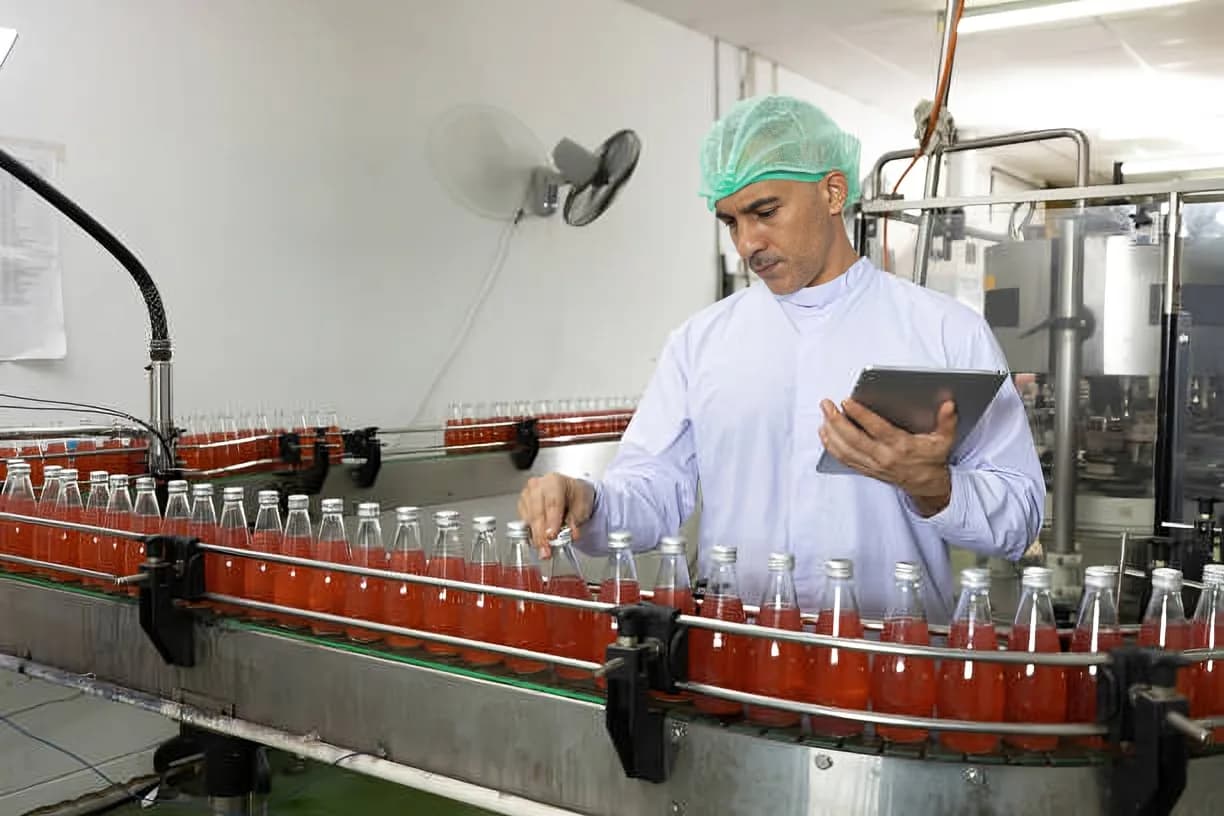
CMMS for food and beverage manufacturing helps facilities stay in line with regulations, cut down on equipment downtime, and lower the risk of contamination by automating maintenance schedules, creating documentation that is ready for audits, and monitoring equipment in real time. This makes it an important operational tool for modern food producers.
Food and beverage manufacturers work in one of the most demanding environments in industry. Not only do broken machines slow down output, they can also lead to expensive recalls, regulatory violations, and serious health problems for the public. When a conveyor belt malfunctions in an automotive plant, you lose output. When one fails in a meat processing plant, you risk contamination.
Because of this, maintenance management is very important in this field. That's why a Computerized Maintenance Management System (CMMS) is now an important piece of technology for all food and drink businesses around the world.
This article explains what a CMMS is and why maintenance needs to be done differently in the food and drink industry. It also shows how the right system can make a real difference in compliance, speed, and profits.
What Is a CMMS and What Does It Do?
A CMMS is a piece of software that makes repair management easier and more streamlined across a building. Some of the most important tasks are making and following up on work orders, planning preventative maintenance, keeping track of equipment history, managing spare parts inventory, and sending out compliance reports.
For companies that make food and drinks, a CMMS is the main system that keeps repair teams, production schedules, and regulatory paperwork all in one place and easy to access.
What Makes Food & Beverage Manufacturing Maintenance So Challenging?
Most industries that make things have to deal with worn-out tools. All of that is true for food and drink facilities, plus strict sanitation rules, rules from multiple jurisdictions, and no tolerance for contamination.
Some important problems are:
Sanitation frequency: Equipment in food processing must be cleaned and sanitized on rigid schedules. Not running cleaning rounds is not only a problem with how things work, it's also against food safety rules.
For high-speed production, many lines have to run all the time, so even short breaks cause big losses in production.
Regulations are hard to understand because facilities have to follow HACCP rules, FDA rules, and the Food Safety Modernization Act (FSMA), all of which require thorough maintenance records with dates.
Risk of contamination: If one piece of equipment breaks down, like a gasket or seal gets cracked, it can let physical or biological contaminants into whole runs of products.
Ready for an audit: Regulatory inspectors want full, well-organized histories of maintenance. Facilities that don't keep systematic records could be fined, fail inspections, or even be shut down.
Because of these stresses, reactive upkeep is not a good idea. For making food and drinks, CMMS changes the way things are done from being reactive to being proactive.
Key Benefits of CMMS for Food & Beverage Manufacturing
How does CMMS help food manufacturers maintain regulatory compliance?
CMMS for making food and drinks makes structured, time-stamped records of maintenance that directly help with HACCP, FDA, and FSMA compliance. Every work order, inspection, and fix is automatically recorded, creating an audit trail that regulators can look over without having to have facility staff put together records by hand.
The CMMS has built-in preventive maintenance schedules that make sure that key control points are checked at regular times. This lowers the risk of compliance gaps.
How does CMMS reduce equipment downtime in food production?
A CMMS makes sure that equipment is serviced before it breaks down by automating the scheduling of preventive maintenance. The biggest thing that cuts down on downtime is this fundamentally different way of doing maintenance that addresses wear before it breaks down.
Based on real-world data from food industry deployments, CMMS cuts unplanned downtime by 20–30% at facilities. Planned maintenance is always cheaper than reactive repair, so when there are fewer emergencies, maintenance costs per machine are also lower.
How does CMMS minimize contamination risks in food processing?
When equipment is in good shape, it's less likely to shed particles, let bacteria grow in worn seals, or break down in a way that damages the purity of the product. With a CMMS for food and beverage manufacturing, maintenance teams can keep track of both mechanical and sanitation tasks in one system, making sure that nothing is missed.
What are the financial benefits of CMMS in food manufacturing?
CMMS not only lowers the cost of emergency repairs, but it also increases the life of equipment by making sure that it is regularly serviced. This puts off spending money on new ones and increases the return on investment in current equipment. Indirectly, buildings that have good maintenance records do better on insurance reviews and supplier audits, which can add to their profits.
How CMMS Improves Operational Efficiency in Food & Beverage Facilities
What operational tasks does CMMS automate for maintenance teams?
A CMMS creates and sends work orders automatically based on set times, readings from equipment, or events that happen. Maintenance workers get their tasks on their phones, can check on the progress of their work in real time, and can keep track of the parts they've used without having to use paper or coordinate their work by hand.
This automation makes a number of operational improvements, including:
Real-time visibility of equipment: Supervisors can see what's going on with all of the facility's assets and tasks that are supposed to be done.
Spare parts management: The system keeps track of inventory levels and can send reorder alerts before stock runs out. This keeps maintenance from being held up because of lost parts.
Scheduling technicians: The CMMS shows who is available, what skills are needed, and where backlogs are building, and resources are distributed based on that data.
Predictive maintenance capability: Advanced CMMS platforms analyze equipment performance trends to flag assets approaching failure before visible symptoms show.
All of these features make it easier for support teams to do their jobs by letting them focus on technical tasks instead of coordinating with other teams.
How to Select the Right CMMS for Your Food & Beverage Operation
What features should food manufacturers prioritize when choosing a CMMS?
Not every CMMS is made to meet the needs of food and drink standards. When food companies look at platforms, they should focus on:
Mobile access: Technicians on the plant floor need to be able to join in and get information without having to go back to a desktop.
Compliance reporting: The system should generate reports formatted for HACCP audits and FDA inspections with minimal manual effort.
Integration of ERP and production systems: A CMMS that works with your current ERP platform keeps data from being stored in separate areas and lets people from different departments see what's going on.
Scalability: Growing operations need a system that can accommodate additional facilities, equipment types, and users without requiring a platform change.
Support and training from the vendor: How well staff use the CMMS system is a big part of how well it works. Put vendors who offer structured onboarding and ongoing support at the top of your list.
Should small and mid-sized food manufacturers invest in CMMS?
Yes, and the entry point is easier to get to than many companies think. With cloud-based CMMS platforms, facilities that couldn't afford the infrastructure costs of on-premise software can now get enterprise-level maintenance management. If a food company has to go through regulatory audits, the benefits of better paperwork and compliance usually make the investment worth it on their own.
The Real-World ROI of CMMS in Food & Beverage Manufacturing
When used in food and drink settings, CMMS gives a return that comes from more than one way at the same time. The following results have been documented from manufacturing deployments:
20–30% less downtime thanks to preventive maintenance programs
Lower emergency repair costs, since planned maintenance constantly costs less per event than unplanned breakdowns
After putting in place structured maintenance documentation, audit results got better, with facilities reporting fewer non-conformances and regulatory penalties going down.
Less chance of having to recall a product because of better equipment maintenance and contamination prevention
These aren't one-time gains; they add up. If a building spends less on emergency repairs, the money can be put toward predictive analytics. Better audit results reduce the administrative cost of compliance. Fewer recalls protect brand reputation, which has its own revenue impact.
Is CMMS Worth the Investment for Your Food & Beverage Facility?
CMMS for food and drink manufacturing addresses the biggest problems in the business, like contamination, not following the rules, and unplanned downtime. The question isn't really whether the technology works the documented outcomes across the industry are consistent. The more important question is whether the way you do maintenance now is leaving compliance gaps, business inefficiencies, or opportunities to save money on the table.
On all three counts, the answer is yes for most food and drink companies that don't have a CMMS.
Start by auditing your existing maintenance documentation. A CMMS is meant to fill in the blanks if your team can't quickly and easily put together a full, well-organized history of all the maintenance done on any piece of important equipment. Look into the platforms that have features for food and beverage compliance, ask for demos, and compare the times needed for implementation to your next scheduled audit cycle.
The facilities winning on compliance, efficiency, and product quality aren't doing it with clipboards and spreadsheets.
They're doing it with tools built for the complexity of the work.
Keep reading
More from the Mantrix blog

How Corrective Maintenance Software Reduces Downtime for Pakistani Factories
Corrective maintenance software helps Pakistani factories reduce unplanned downtime by speeding up fault reporting, work order management, and repair response.

Best Retail Store Maintenance Software in Pakistan
Retail chains in Pakistan need a reliable way to manage maintenance across multiple stores. Discover how retail store maintenance software helps track work orders, manage vendors, schedule preventive maintenance, and reduce downtime with Mantrixs.
Best HVAC Maintenance Software in Pakistan for Facility Teams
Discover how HVAC maintenance software helps facility teams in Pakistan schedule preventive maintenance, track repairs, and reduce costly downtime.