Enterprise Asset Management
How Enterprise Asset Management (EAM) Helps Organizations Reduce Costs
See how a modern Enterprise Asset Management (EAM) solution empowers organizations to streamline maintenance operations, reduce downtime, and maximize the value of every asset.

Enterprise asset management (EAM) helps businesses save money by letting them do preventative maintenance, track assets in real time, and make decisions based on data. Companies that implement EAM systems typically reduce maintenance costs by up to 25% and equipment downtime by as much as 40%, delivering measurable ROI within the first year.
The costs of doing business are going up. In every industry, energy costs, wage costs, and problems in the supply chain are reducing profit margins. This is especially true for businesses that depend on physical assets. Every year, budgets are quietly slashed by broken equipment, reactive upkeep, and poor inventory control.
Enterprise asset management offers a structured solution. EAM is a type of software and an operational strategy that makes it easier to handle all of a company's physical assets, from buildings and vehicles to machinery and tools, throughout their whole lifecycle. The goal is simple: get more value from every asset while spending less to maintain it.
If you want to know how enterprise asset management cuts costs, what bad asset management costs you, and how to choose the best EAM solution, read this post.
What Are the Hidden Costs of Poor Asset Management?
A lot of businesses don't realize how much their unmanaged assets cost them. The expenses rarely appear as a single line item they accumulate quietly through inefficiency, failure, and waste.
Downtime that wasn't planned is one of the worst effects.When equipment breaks down without notice, work stops, deadlines are missed, and the cost of emergency repairs goes through the roof. According to a report by Siemens, unplanned downtime costs industrial manufacturers an estimated $50 billion annually.
Reactive maintenance makes the problem worse. Without a preventive schedule, maintenance teams respond to breakdowns rather than preventing them. Emergency repairs typically cost three to five times more than scheduled maintenance, and they often require expedited parts procurement at premium prices.
Poor asset lifecycle visibility creates a different kind of cost. Without accurate depreciation data and utilization tracking, organizations make uninformed decisions replacing assets too early, running them past their useful life, or purchasing redundant equipment because existing assets are unaccounted for.
Mismanagement of inventory completes the picture. Having too many extra parts on hand wastes money. Not having enough parts on hand slows down maintenance. Either way, the group pays.
How Does Enterprise Asset Management Reduce Operational Costs?
All of these problems can be fixed by EAM systems that use automation, real-time data, and structured workflows.
How does preventive maintenance planning lower repair costs?
Instead of waiting for something to break, enterprises can use enterprise asset management platforms to plan maintenance based on the state of assets, how often they are used, and how often they have broken in the past. Preventive maintenance makes things last longer, cuts down on the number of times they need to be fixed in an emergency, and lowers the average cost of each maintenance event.
EAM systems that are more advanced can do predictive maintenance, which uses sensor data and machine learning to tell when an object is about to break down before any obvious signs show up. Most of the cost cuts happen when maintenance moves from being reactive to being predictive.
How does real-time asset tracking optimize resource allocation?
EAM systems keep track of where all the assets are, how they're doing, how often they're being used, and what maintenance has been done on them. This makes it possible to avoid buying things that are already being used, helps procurement teams make decisions based on facts, and makes sure that expensive equipment is put to use where it will do the most good.
Assets that aren't being used are a big cost that is often forgotten. When businesses see that a piece of equipment isn't being used 60% of the time, they can either move it to a different job, hire it, or take it off the asset register. All of these options lower the costs of keeping the equipment.
How do automated workflows improve team productivity?
Managing work orders by hand, keeping maintenance logs on paper, and not being able to talk to each other between teams all cause delays and mistakes. Enterprise asset management platforms automate tasks like making schedules, creating work orders, and assigning technicians. This cuts down on administrative work and makes sure that maintenance tasks are done on time.
Automation of processes also makes compliance documentation better, which is very helpful during audits and regulatory inspections.
What Are the Key Cost Reduction Benefits of EAM?
Enterprise asset management has a number of different types of financial effects, such as:
Lower maintenance and repair expenses Predictive and preventative maintenance programs cut down on the cost of emergency repairs and increase the time between major overhauls.
Less downtime for equipment Critical assets stay operational thanks to planned maintenance and early failure detection, which protects production output and revenue.
Longer asset lifecycles Well-maintained assets last longer, delaying costly capital replacements.
Decreased inventory carrying costs Accurately tracking spare parts keeps you from having too many on hand and makes sure that important parts are available when they're needed.
Improved regulatory compliance Compliance violations and the fines that come with them are less likely to happen when paperwork is done automatically.
Real-World Examples and ROI Metrics
The cost savings from business asset management are well-documented across industries.
A big manufacturing company that adopted an EAM platform reported a 25% reduction in maintenance costs within 18 months of deployment. By shifting from reactive to preventive maintenance, the organization eliminated most of its unplanned downtime and greatly reduced its emergency parts spend.
Enterprise asset management was used by a healthcare facility network to keep track of how medical equipment was being used and when it needed to be serviced across multiple sites. As a result, 40% less equipment was idle, which directly increased the number of patients who could be cared for and lowered the cost of renting backup equipment when equipment failed.
Most businesses get their money back on their EAM investment in 12 to 24 months, but this depends on the complexity of their assets, the size and scope of their implementation, and how their maintenance operations were before they started using EAM. Because they save so much money, bigger businesses with more physical infrastructure often see ROI even faster.
How Do You Choose the Right EAM Solution for Your Organization?
Before you choose a corporate asset management system, you should carefully look at your company's assets, team structure, and current technology stack.
What features should you prioritize in an EAM platform?
Look for platforms that let you schedule preventative and predictive maintenance, let field technicians access them from their phones, let you track assets in real time, give you full reports and analytics, and connect to your current ERP, CMMS, or financial systems.
Scalability is also important. If you choose the right EAM option, it should be able to grow with your business and not need a full system replacement as your assets grow.
What implementation and change management factors affect EAM success?
Technology is just one part of the picture. For an EAM implementation to go well, there needs to be clear internal ownership, clear processes before configuration starts, and structured training for the teams that will be using the system every day. When companies spend money on both technical deployment and change management, the adoption rate is always faster and the return on investment (ROI) is higher.
Integration with existing systems particularly finance and procurement platforms is important for accurate lifecycle costing and budget forecasting. The strategic usefulness of the system is limited when EAM data is kept separate.
Enterprise Asset Management: A Strategic Investment, Not Just a Cost Tool
Over time, companies that see enterprise asset management as an investment rather than a tool for maintenance gain a lot of benefits. Better data leads to better decisions. When you make better choices, the costs go down. Lowering costs gives you extra money to improve how things work.
The gap between companies with mature EAM programs and those that don't will grow as assets get more complicated and operating needs rise. Cost savings are real, can be measured, and can be reached, but only if you commit to the process, not just the program.
Are you ready to learn more about how company asset management can help your business save money? Request a consultation or download our EAM implementation guide to get started.
Keep reading
More from the Mantrix blog
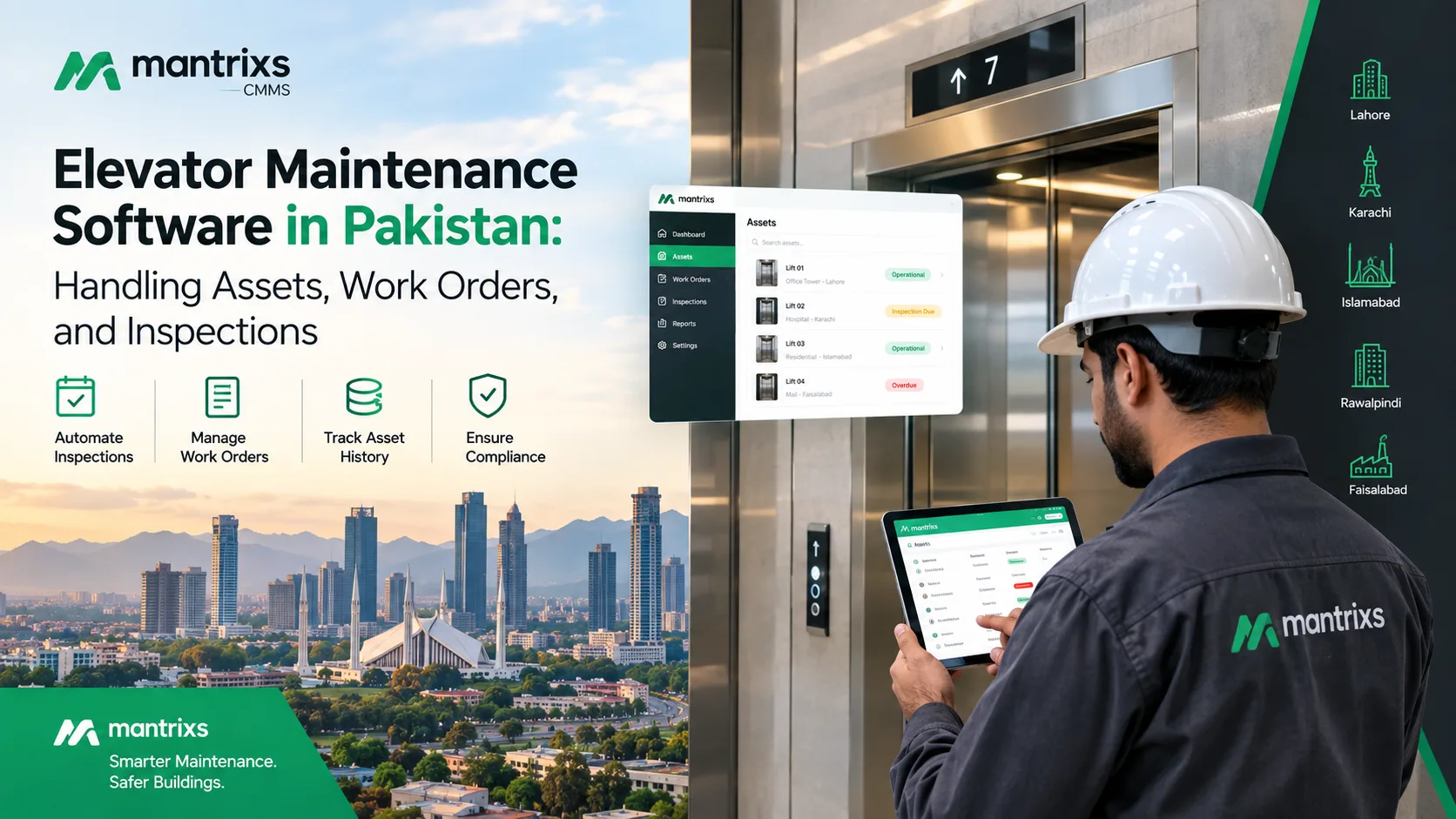
Elevator Maintenance Software in Pakistan: Handling Assets, Work Orders, and Inspections
Discover how elevator maintenance software in Pakistan helps facility teams manage assets, inspections, work orders, maintenance records, and multiple properties.
How Corrective Maintenance Software Reduces Downtime for Pakistani Factories
Corrective maintenance software helps Pakistani factories reduce unplanned downtime by speeding up fault reporting, work order management, and repair response.

Best Retail Store Maintenance Software in Pakistan
Retail chains in Pakistan need a reliable way to manage maintenance across multiple stores. Discover how retail store maintenance software helps track work orders, manage vendors, schedule preventive maintenance, and reduce downtime with Mantrixs.