OEM
CMMS for OEMs: Improve Maintenance Operations
Maintaining machinery and equipment is a crucial aspect of any Original Equipment Manufacturer (OEM) operation.

Maintaining machinery and equipment is a crucial aspect of any Original Equipment Manufacturer (OEM) operation. The ways that maintenance tasks are managed change as technology and the manufacturing world change. CMMS stands for computerized maintenance management systems. These systems are changing the way OEMs do maintenance by streamlining processes that make them more productive and efficient.
Imagine knowing how your assets are doing in real time, being able to easily keep track of work orders, and being able to see failures coming before they happen. CMMS provides these capabilities and more. It not only simplifies complex maintenance operations but also empowers OEMs to focus on what truly matters: producing high-quality products while minimizing downtime.
As we go deeper into this subject, you'll learn about all the great reasons why your company should use CMMS. Whether you're a seasoned manufacturer or a new one, knowing how to get the most out of your repair tasks can help you stand out in today's market. Let us talk about how CMMS can make your OEM business better!
Benefits of Using CMMS for OEMs
Original Equipment Manufacturers (OEMs) can completely change how they do business by putting in place a Computerized Maintenance Management System (CMMS). Improving efficiency is one of the main benefits. OEMs can improve workflows and cut down on downtime by automating maintenance tasks.
Cost savings are another major advantage. A CMMS enables better tracking of equipment performance and maintenance history, allowing for predictive maintenance strategies that reduce unexpected breakdowns and repair costs.
With a CMMS, it's easier to make sure that you're following industry rules. Documentation of maintenance tasks ensures accountability and supports audits seamlessly.
Real-time data analytics also gives information about the health of machines. This knowledge gives OEMs the power to make smart choices about how to use their resources and whether to invest in new technologies or upgrades.
Centralized data access makes it easier for teams to work together, which leads to better communication between departments within a company.
Key Features of CMMS for OEMs
A robust CMMS tailored for original equipment manufacturers (OEMs) comes packed with important features. These tools make repair easier and make operations run more smoothly.
Asset management is vital. It helps OEMs to track equipment performance, lifespan, and service records seamlessly. Teams can use this information to make smart choices about whether to fix something or replace it.
Work order handling is another key feature. It simplifies task assignment, prioritization, and tracking of maintenance activities. Teams stay proactive instead of reactive when they have automated reminders.
When inventory management is integrated, spare parts can be tracked in real time. OEMs can keep production going smoothly without any breaks by avoiding running out of stock or having too much of it.
Analytics and reporting help you see patterns and trends in how maintenance work is done. This information drives strategies for continuous improvement, which save money and make everyone more productive in the long run.
Case Study: How a Manufacturing Company Utilized CMMS to Improve Maintenance Operations
A major manufacturing company had problems with their equipment breaking down all the time, which slowed down production and raised costs. To tackle this issue, they adopted a Computerized Maintenance Management System (CMMS).
When they started using CMMS, it changed the way they did maintenance. Technicians could predict problems before they happened if they could see how assets were doing in real time. This proactive approach cuts down on downtime by a large amount.
Automated workflows made it easier to handle maintenance requests, which helped teams focus on the most important jobs first. The data-driven insights given by the CMMS helped spot recurring issues with specific machinery.
Everyone on staff was trained on the new method to make sure everyone was on board with it. As a result, communication improved across areas and led to faster response times for repairs.
Within months of putting CMMS into place, the company reported a 30% drop in unplanned downtime and big savings on repair costs, which changed not only their maintenance but also how well they ran their business overall.
Common Challenges and Solutions for Implementing CMMS in the OEM Industry
Implementing CMMS in the OEM industry can be challenging. One problem that comes up a lot is workers who don't want to change. Many team members may feel comfortable with existing processes and might hesitate to adopt new technology.
To get over this obstacle, training is very important. Giving staff thorough training helps them understand the benefits of CMMS and pushes them to use it.
Data migration offers another challenge. Transferring information from legacy systems can lead to inaccuracies or loss of important data. To mitigate this, conduct a thorough audit of existing data before implementation.
Integration with current systems often complicates matters further. A seamless connection between CMMS and other software solutions is necessary for efficiency. Pick a CMMS that is flexible and supports integrations. Teams will be able to work together better because of this.
It's important not to forget about ongoing help after implementation. Setting up a support team makes sure that users can get help when they need it, which boosts their confidence in the new system.
Selecting the Right CMMS for Your OEM Business
Choosing the right CMMS for your OEM business can feel overwhelming. Start by assessing your specific needs. What are the pain points in your current maintenance process? Understanding these areas will guide you in selecting software that addresses them effectively.
Next, consider scalability. As your operations grow, so should your CMMS capabilities. Look for a solution that can adapt to increasing demands without compromising performance.
User-friendliness is also essential. A complex interface can hinder adoption among staff members, leading to wasted time and resources.Choose a system that is simple and easy to use.
Evaluate customer support options offered by vendors. Reliable assistance is crucial when facing technical challenges or needing guidance during implementation. Prioritize systems with strong customer service histories to ensure smooth operation as you transition into using CMMS technology in your OEM processes.
Conclusion
For original equipment manufacturers (OEMs), the landscape of maintenance operations is shifting. Computerized Maintenance Management Systems (CMMS) make it possible to be more efficient and productive in ways that were hard to do before. By harnessing the power of CMMS, OEMs can unlock an array of benefits from reducing downtime and streamlining processes to enhancing compliance with industry standards.
The way your organization handles maintenance management can change if you choose the right CMMS that fits your needs. With key features designed specifically for the challenges faced by OEMs, these systems provide invaluable insights into asset lifecycle management, scheduling preventive maintenance, and facilitating better communication among teams.
There are examples from real life that show how manufacturing companies have used CMMS solutions to improve their processes. These case studies reveal tangible results: improved operational efficiency, lower costs, and enhanced product quality.
However, putting in place a CMMS isn't always easy. A lot of OEMs have trouble integrating new technology with old systems or getting staff to accept it. Addressing these challenges head-on through proper training and strategic planning can pave the way for successful implementation.
As you look at your options in this changing area, think about which features are most important for your business. A careful selection process will make sure that your investment pays off in a big way, not just for maintenance but for the whole business.
Engaging with a robust CMMS could set up your business for sustained success in today's competitive market landscape while adhering closely to changing industry demands and technologies within the OEM sector.
Keep reading
More from the Mantrix blog

Parking Lot Maintenance: Save Money with Preventive Care
A proactive parking lot maintenance strategy helps prevent potholes, cracks, drainage issues, and costly repairs. This guide explains preventive maintenance, common parking lot problems,

Agtech Farm Equipment Maintenance: Common Challenges and How to Solve Them
Farm equipment maintenance is becoming more complex as modern machinery evolves. Learn how digital maintenance systems, preventive scheduling, and agtech solutions can reduce downtime and improve equipment reliability.
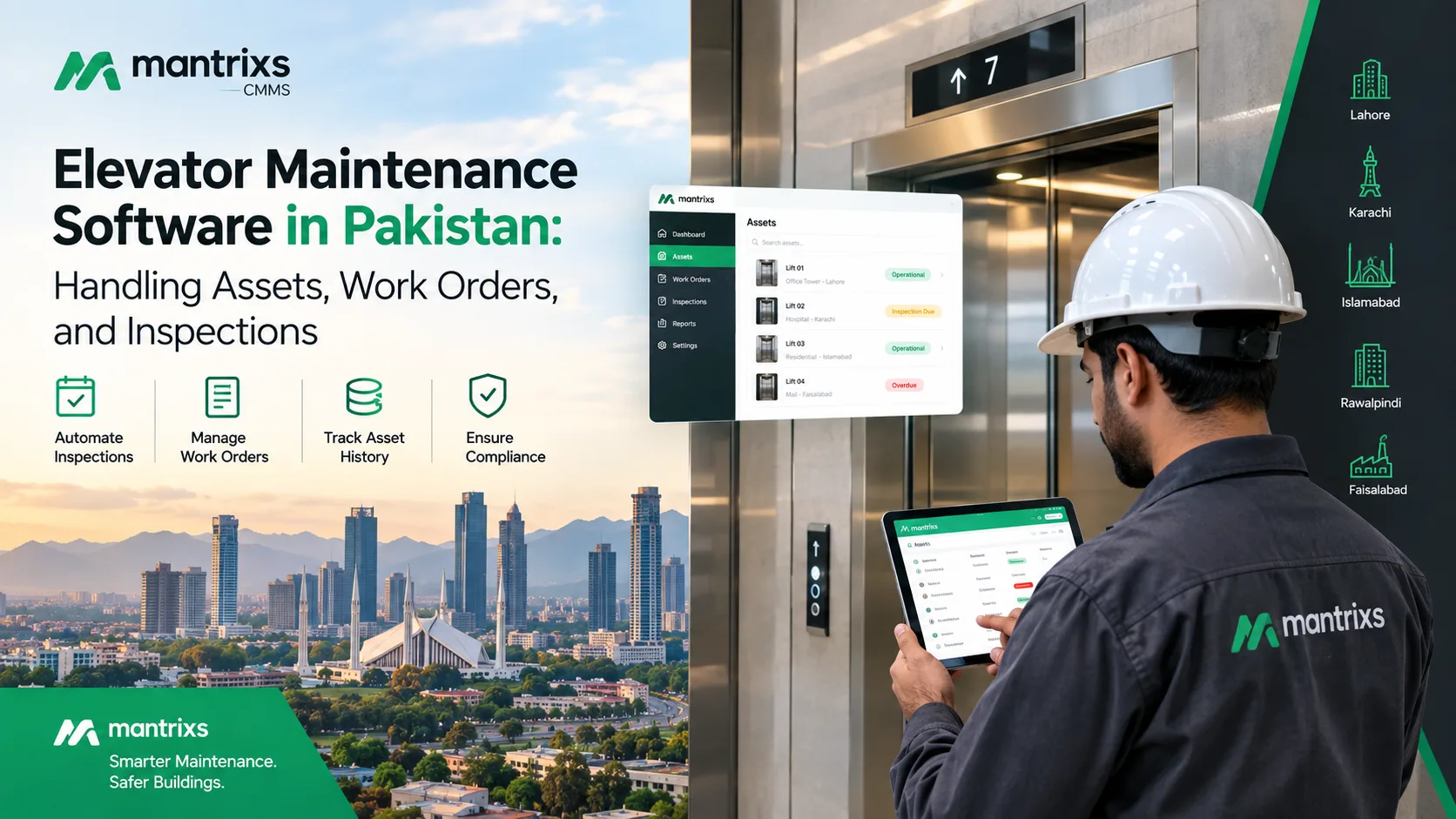
Elevator Maintenance Software in Pakistan: Handling Assets, Work Orders, and Inspections
Discover how elevator maintenance software in Pakistan helps facility teams manage assets, inspections, work orders, maintenance records, and multiple properties.