On-Time Delivery
On-Time Delivery: How Preventive Maintenance Reduces Delays
On-time delivery (OTD) depends a lot on how well the equipment works. By planning inspections and repairs before they happen, preventive maintenance cuts down
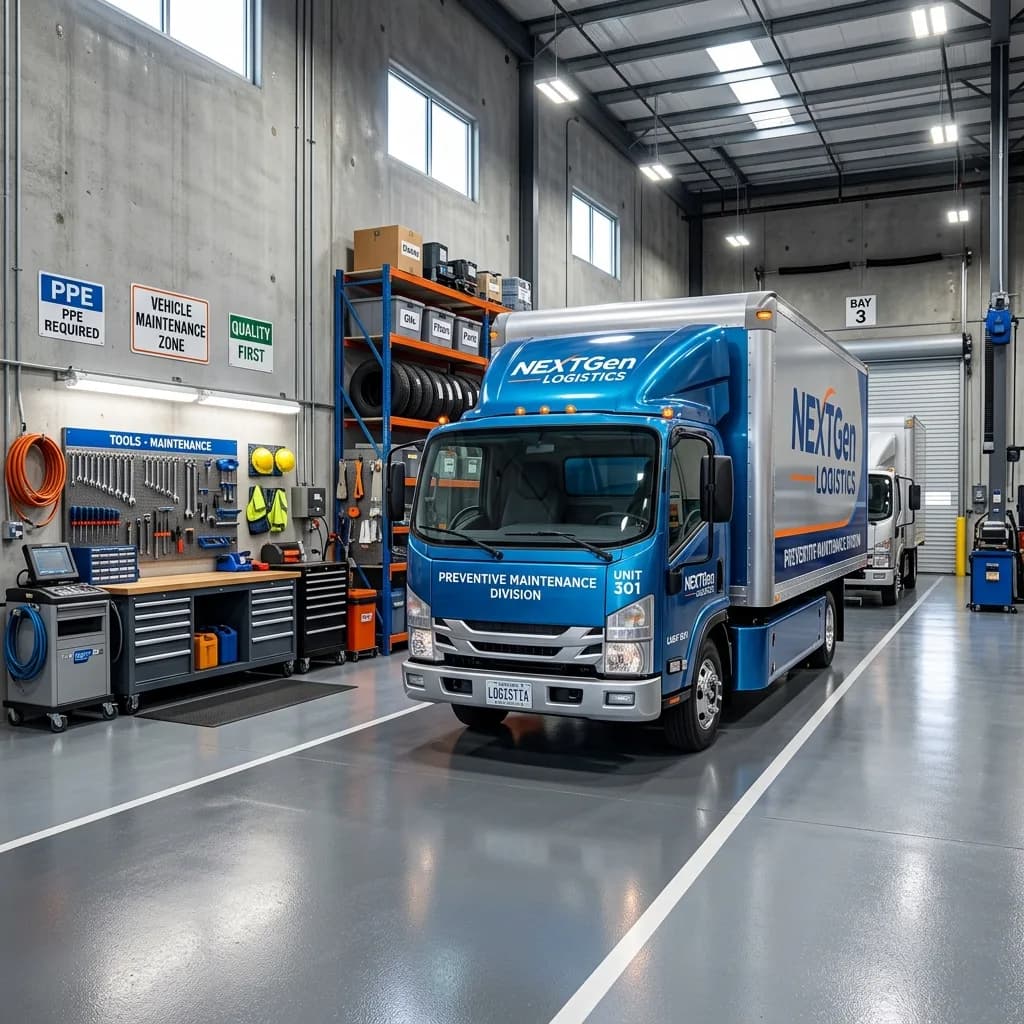
On-time delivery (OTD) depends a lot on how well the equipment works. By planning inspections and repairs before they happen, preventive maintenance cuts down on unplanned downtime. When operations teams use CMMS software and keep an eye on KPIs like MTBF and MTTR, they can find problems early and keep production schedules on track.
Imagine a busy factory in the middle of the shift: a key piece of equipment stops working without warning, production stops, and the delivery date passes. The customer is told about the wait time. The sales staff needs to get going soon. When things like this happen a few times, they really hurt a company's reputation.
On-time delivery is one of the most visible indicators of operational health. Customers expect it. It's often required by contracts. And when it consistently falls short, the root cause frequently traces back not to logistics, but to equipment reliability. Unplanned downtime is one of the leading contributors to production delays and it's largely preventable.
This post explores how preventive maintenance supports on-time delivery, which maintenance KPIs to track, and how CMMS software can help operations and maintenance teams build more reliable systems.
What Is On-Time Delivery and Why Does It Matter?
On-time delivery (OTD) is the percentage of orders that are delivered by or before the agreed upon date. To find the OTD rate, simply divide the number of on-time deliveries by the total number of deliveries and then multiply by 100.
A high OTD rate means that a business can be trusted to deliver. A low rate, on the other hand, means that the opposite is true, and the problems escalate quickly. Late deliveries can lead to financial penalties in supplier contracts, loss of customer trust, and the risk of future orders. According to a Gartner report, supply chain disruptions cost companies an average of 45% of their annual profits over a decade. Equipment failure is a major and often overlooked cause of these disruptions.
How Equipment Downtime Impacts On-Time Delivery
Unexpected downtime doesn't just stop work for an hour. It triggers a chain reaction. Maintenance teams are called away from their regular work to fix the problem. It's possible that replacement parts need to be found quickly. The operators do nothing. When production resumes, teams scramble to recover lost time often unsuccessfully.
In discrete manufacturing, a single unplanned machine failure can delay an entire production batch. In process businesses like chemicals or food, it can mean throwing away the whole product. Either way, the delivery schedule takes a hit.
The distinction between planned and unplanned downtime matters here. Maintenance, changeovers, and inspections that need to happen at set times are planned for and accounted for in the production schedule. Off-hours downtime is not. It's always reactive and happens at the worst possible time: right in the middle of something important.
What Is Preventive Maintenance?
Prevention maintenance (PM) is a proactive approach to maintenance in which equipment is checked, serviced, and fixed on a set plan before it breaks down. Conversely, reactive repair (also known as "run-to-failure") teams only come in when equipment breaks down.
A well-organized preventive maintenance plan includes regular cleaning and lubrication, replacing parts based on manufacturer recommendations or usage hours, and written work orders to keep track of what was done and when.
The goal isn't to get rid of all equipment failures; some will still happen. The goal is to reduce their frequency and catch early warning signs before they become costly production stoppages.
How Preventive Maintenance Improves On-Time Delivery
The link between preventive maintenance and on-time delivery is straightforward: equipment that is regularly maintained fails less often. With fewer mistakes, there will be fewer stops that weren't planned. When there are fewer stops, production stays more on schedule.
Take a look at a packaging line in a factory that makes market goods. If the closing unit fails without warning, it affects every order that comes after it. A PM schedule that includes weekly checks of sealing temperature and mechanical wear can catch degradation early allowing a planned repair during a scheduled break rather than an emergency shutdown mid-production.
Predictability is also helped by preventive maintenance. Production planners can keep track of maintenance tasks when they are planned and written down. That kind of visibility is necessary for making realistic plans and delivering on time every time.
Key Maintenance KPIs That Affect Delivery Performance
By keeping an eye on the right metrics, the operations and maintenance teams can tell if their strategy for maintenance is actually helping them meet their delivery goals. These are the most important KPIs:
MTBF (Mean Time Between Failures): The average time an asset operates between failures. A rising MTBF shows that equipment is becoming more reliable. A declining MTBF is a warning sign.
Mean Time to Repair, or MTTR, is the average amount of time it takes to fix something that has broken. When MTTR is low, recovery is faster and production isn't affected as much.
Planned Maintenance Percentage (PMP): The proportion of maintenance work that is planned versus reactive. A more mature and proactive maintenance program usually has a higher PMP.
Maintenance Backlog: The number of unfinished work orders. A growing backlog can indicate that PM tasks are being deprioritized often at the cost of equipment reliability.
Overall Equipment Effectiveness (OEE) is a measure that takes into account quality, effectiveness, and availability. OEE gives you a bigger picture of how well your assets are being used.
Together, these KPIs give operations leaders a clear picture of where maintenance gaps exist and how those gaps are likely to affect delivery performance.
How CMMS Software Helps Reduce Delays and Downtime
A computerized maintenance management system (CMMS) is a piece of software that makes it easier to schedule work orders, keep track of the history of assets, keep track of spare parts, and make performance reports.
Preventive maintenance is often done on spreadsheets, whiteboards, or people's own memories when there isn't a CMMS. Things get missed. Work orders are done, but they are not recorded. No one is sure when a very important part was last serviced. It's hard to find problems before they cause downtime because you can't see them.
That changes with a CMMS because it schedules maintenance automatically, sends reminders when PM tasks are due, and keeps a full service history for each asset. Maintenance managers can see what's been done, what's ongoing, and which assets are overdue for service all in one place.
CMMS platforms also support better decision-making. When MTBF and MTTR data are tracked consistently over time, patterns emerge. If an asset needs repairs often that weren't planned for, it might be time to replace it or put it on a more intensive PM schedule.
How Mantrixs CMMS Supports On-Time Delivery
Structured preventive maintenance management is built into Mantrixs CMMS to help operations and maintenance teams cut down on unplanned downtime. Some of the most important skills that help with delivery performance are:
PM scheduling that is automatically done based on time intervals, usage hours, or condition triggers
Work order management lets you assign, track, and finish maintenance tasks with full records.
Asset history tracking to spot recurring failures and make informed maintenance decisions
MTBF, MTTR, and backlog data can be seen in real time on maintenance KPI dashboards.
Spare parts inventory management to reduce delays caused by missing components
By giving maintenance teams better tools to plan and perform PM tasks, Mantrixs CMMS helps reduce the reactive firefighting that leads to unplanned stoppages and delivery delays.
Preventive Maintenance Best Practices for Reliable Operations
A program for preventive maintenance is only as good as the people who follow it. A few actions really make a difference:
Make PM schedules based on what the maker says and how things are used in real life. Manufacturer recommendations are a starting point, not a rulebook. High-utilization equipment may need more frequent service than the manual suggests.
Sort assets by how important they are. Not every piece of equipment is risky. Identify the assets whose failure would have the greatest impact on production and delivery, and ensure those have the most thorough PM coverage.
Keep spare parts for critical components on hand. Even well-maintained equipment sometimes needs emergency fixes. Having the right parts in stock can reduce MTTR greatly.
Write down everything. If a PM task isn't written down, it might as well not have happened. Full work order documentation makes the asset history needed to see patterns and make choices based on facts.
Common Maintenance Mistakes That Cause Delivery Delays
Even places with formal maintenance programs can fall into habits that make equipment less reliable:
Deferring PM tasks when production pressure is high. This is a mistake that many people make that costs a lot of money. The short-term gain of keeping a line going rarely outweighs the risk of an unexpected breakdown days later.
Instead of treating the causes, they treat the symptoms. Fixing a recurring fault without investigating why it keeps occurring leads to repeat failures.
Not enough management of spare parts. Not having a key part during a repair causes extra downtime that doesn't need to be there.
Maintenance and production teams aren't talking to each other enough. When production planning and maintenance schedules don't work together, PM work either gets skipped or causes problems that could have been avoided.
How to Build a Maintenance Strategy for Better On-Time Delivery
Using maintenance to improve on-time delivery isn't a one-time thing; it's a process that goes on all the time. A practical approach:
Check the way maintenance is done now to find holes, work that has been put off, and assets that tend to break down often.
Set criticality levels for all assets based on how they affect the output of production.
Make an organized project management plan for important assets that makes it clear who is responsible for what and what needs to be documented.
Set up a CMMS to keep track of KPIs, schedules, and work orders.
Every month, look over the maintenance KPIs and change how often PMs happen based on how often failures happen.
Establish a feedback loop between maintenance and production to align schedules and flag emerging reliability concerns.
Improve Reliability and Keep Deliveries On Time
Getting things delivered on time depends on a lot of factors, but maintenance teams can directly affect how reliable equipment is. A structured preventive maintenance program, backed by the right tools and KPIs, helps reduce unplanned downtime, improve production predictability, and give customers more consistent delivery performance.
None of this completely gets rid of risk. Things will still break down sometimes. But companies that spend money on proactive maintenance management are better able to find problems early, fix them faster when they do happen, and keep their service promises over time.
If your facility is experiencing recurring production delays, it's worth examining whether your maintenance strategy is adding to the problem and how tools like Mantrixs CMMS can support a more reliable operation.
Keep reading
More from the Mantrix blog

Parking Lot Maintenance: Save Money with Preventive Care
A proactive parking lot maintenance strategy helps prevent potholes, cracks, drainage issues, and costly repairs. This guide explains preventive maintenance, common parking lot problems,
Agtech Farm Equipment Maintenance: Common Challenges and How to Solve Them
Farm equipment maintenance is becoming more complex as modern machinery evolves. Learn how digital maintenance systems, preventive scheduling, and agtech solutions can reduce downtime and improve equipment reliability.
Elevator Maintenance Software in Pakistan: Handling Assets, Work Orders, and Inspections
Discover how elevator maintenance software in Pakistan helps facility teams manage assets, inspections, work orders, maintenance records, and multiple properties.