Repair and Maintenance Checklist
Repair and Maintenance: A Complete Guide to Managing Equipment
Repair and maintenance are essential for keeping equipment, buildings, and facilities safe, reliable, and efficient. Learn about maintenance strategies, equipment failures,
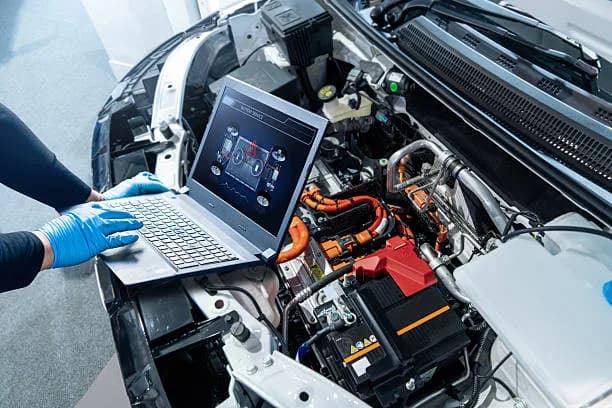
Equipment, buildings, and structures must be repaired and maintained in order to keep them safe and working well. A structured maintenance plan can help you keep costs down, avoid unexpected breakdowns, and extend the life of your assets, whether you're in charge of a factory, office building, hospital, warehouse, or store.
What Is Repair and Maintenance?
Repairing something means putting it back together again after it has broken, stopped working right, or failed.
Maintenance is the process of keeping something in good working order by checking it over, servicing it, making adjustments, replacing parts, and planning repairs.
Fixing a broken HVAC compressor is an example of a repair task. On the other hand, servicing the system, cleaning the filters, checking the refrigerant levels, and reviewing the electrical connections are examples of maintenance tasks.
When done together, repair and maintenance help businesses keep their assets safe, reliable, and performing well.
Repair vs. Maintenance: What Is the Difference?
These words are often used together, but they mean different things.
Repair
Maintenance
Usually performed after a problem occurs
Can be performed before a failure occurs
Restores an asset to working condition
Keeps an asset operating properly
Often reactive
Can be preventive, predictive, or corrective
Triggered by breakdown or damage
Triggered by time, usage, condition, or inspection
Focuses on fixing a specific problem
Focuses on long-term asset reliability
For instance, if the air conditioner in a business building stops working, fixing it means replacing the broken part. Maintenance means setting up regular times to clean the filters and check the system.
Why Are Repair and Maintenance Important?
Poor maintenance can cause equipment to break down without warning, leading to higher costs, safety issues, and interruptions in operations.
A repair and maintenance scheme that works well helps businesses:
Lower the number of unexpected equipment breakdowns
Keep operational downtime to a minimum.
Make equipment last longer
Improve job safety
Control maintenance costs
Make equipment more reliable
Plan the technician's work.
Maintain accurate maintenance records
Improve preventive maintenance compliance
Make better maintenance choices using historical data
Common Levels of Equipment Failure
Most troubles with equipment can be put into two main groups.
1. Partial Failure
When technology is still working but not as well as it should, this is called a partial failure.
For instance, an HVAC system might keep going but not cool the room enough. A pump might not work as well as it should, or a machine might shake in a strange way.
Knowing about these problems early on lets the maintenance team fix them before they become major breakdowns.
2. Complete Failure
When an object can't do what it's supposed to do, it's called a complete failure.
As an example:
A motor stops working all together.
There is no longer an elevator available.
The generator won't turn on.
The cooling stops in a refrigeration system.
A machine stops making things.
Complete failures can create significant downtime and emergency repair costs, especially when the equipment is important to business operations.
Types of Repair and Maintenance Strategies
Different maintenance strategies can be used by organizations based on the assets' importance, condition, operating environment, and how likely they are to fail.
1. Reactive Maintenance
When equipment breaks down or starts to have problems, this type of repair is done.
For instance, if a water pump stops working all of a sudden, the maintenance team figures out what's wrong and fixes it.
This method might work for things that aren't very expensive or important and whose failure doesn't have a big effect on operations. But relying too much on reactive maintenance for important equipment can make downtime and the cost of emergency repair go up.
2. Preventive Maintenance
As part of planned maintenance, preventive maintenance is done before equipment breaks down.
Some possible activities are:
Regular check-ups
Putting on oil
Filter replacement
Cleaning
Setting up
Checking the belt
Electrical checks
Replacement of parts
For example, an HVAC system may have a monthly inspection and quarterly servicing schedule.
When scheduled maintenance is due, a CMMS can make it easier to do preventative maintenance by creating work orders automatically.
3. Predictive Maintenance
Predictive maintenance looks at data about the state and performance of equipment to find problems before they happen.
Based on the tools they use, companies may keep an eye on:
Vibration
Temperature
Weakness
Utilization of energy
Condition of the car
Business hours
Readings from the meters
Instead of maintaining an asset simply because a calendar date has come, maintenance can be performed based on its real condition.
4. Reliability-Centered Maintenance
RCM stands for "reliability-centered maintenance." Its goal is to figure out how and why an asset can break down.
Maintenance teams evaluate:
Important equipment functions
Possible types of failure
What happens when you fail?
Root causes
The right maintenance jobs
Required time between inspections
The goal is to develop the most suitable maintenance strategy for each critical asset rather than applying the same maintenance approach to every machine.
How CMMS Improves Repair and Maintenance
As the number of assets and maintenance requests rises, it can be hard to keep track of repairs and maintenance through spreadsheets, paper records, emails, or WhatsApp.
A computerized maintenance management system (CMMS) makes it easy to keep track of all repair tasks from one place.
Service teams can do the following with a CMMS like Mantrix:
Asset Management
Keep detailed records of your assets and tools, including where they are, what they're used for, how important they are, how often they've been serviced, and other important details.
Work Order Management
From one system, you can make, assign, schedule, and keep track of work orders for repairs and maintenance.
Preventive Maintenance Scheduling
Schedule maintenance jobs to be done every day, every week, every month, every three months, or every year.
Maintenance History
For each asset, keep a full record of all inspections, repairs, breakdowns, parts used, costs, and technician activities.
Technician Management
Give technicians work to do and keep an eye on their progress, finish times, and workload.
Maintenance Reporting
Track important success indicators such as:
MTBF MSTL
Downtime for equipment
Costs of maintenance
Finishing the work order
Compliance with preventive maintenance
Breakdown How often
Repair and Maintenance Example: HVAC/VRF System
Think about a business building that has more than one HVAC and VRF system.
The facility team might only come in when an air conditioner stops working if there isn't a structured maintenance system in place.
With a CMMS, the team can build preventive maintenance schedules for:
Filter cleaning
Checking the coil
Checks for coolant
Electrical inspections
Drain cleaning
Checking the fan
Compressor checks
If a VRF unit breaks down, the team can make a work request, give it to a technician, keep track of the diagnosis and repair, and keep the whole history of that piece of equipment.
This makes it easier to find assets that fail often or need a lot of maintenance.
Best Practices for Repair and Maintenance Management
If you want to improve your maintenance work, try these things:
Make a full list of your assets.
Find the important equipment
Set up plans for preventative maintenance
Standardize the way you do maintenance.
Track every repair through work orders
Keep an accurate record of the equipment
Keep an eye on supplies and spare parts
Check the repair KPIs.
Analyze recurring equipment failures
To keep maintenance information in one place, use CMMS software.
Repair and Maintenance Checklist
Before starting a maintenance program, make sure you can answer the following questions:
Do we have a full list of all our assets?
Do we know which ones are the most important?
Is preventative maintenance planned?
Are maintenance requests properly recorded?
Can we keep track of technician assignments?
Can we see a history of equipment maintenance?
Are spare parts readily available when needed?
Do we keep track of downtime and repair times?
Can we find failures that keep happening?
Can managers see maintenance reports?
Final Thoughts
Repairing and maintaining things well is more than just fixing them when they break. It's about setting up a structured process that makes sure assets are always effective, safe, and useful.
Organizations can cut down on unneeded downtime and improve maintenance efficiency by using preventative and predictive strategies along with good work order management, tracking of assets, maintenance history, and performance reports.
With a CMMS like Mantrixs, all of these tasks can be done in one central location. This helps maintenance teams switch from fixing problems as they happen to planning ahead for future maintenance needs.
Keep reading
More from the Mantrix blog

Parking Lot Maintenance: Save Money with Preventive Care
A proactive parking lot maintenance strategy helps prevent potholes, cracks, drainage issues, and costly repairs. This guide explains preventive maintenance, common parking lot problems,
Agtech Farm Equipment Maintenance: Common Challenges and How to Solve Them
Farm equipment maintenance is becoming more complex as modern machinery evolves. Learn how digital maintenance systems, preventive scheduling, and agtech solutions can reduce downtime and improve equipment reliability.
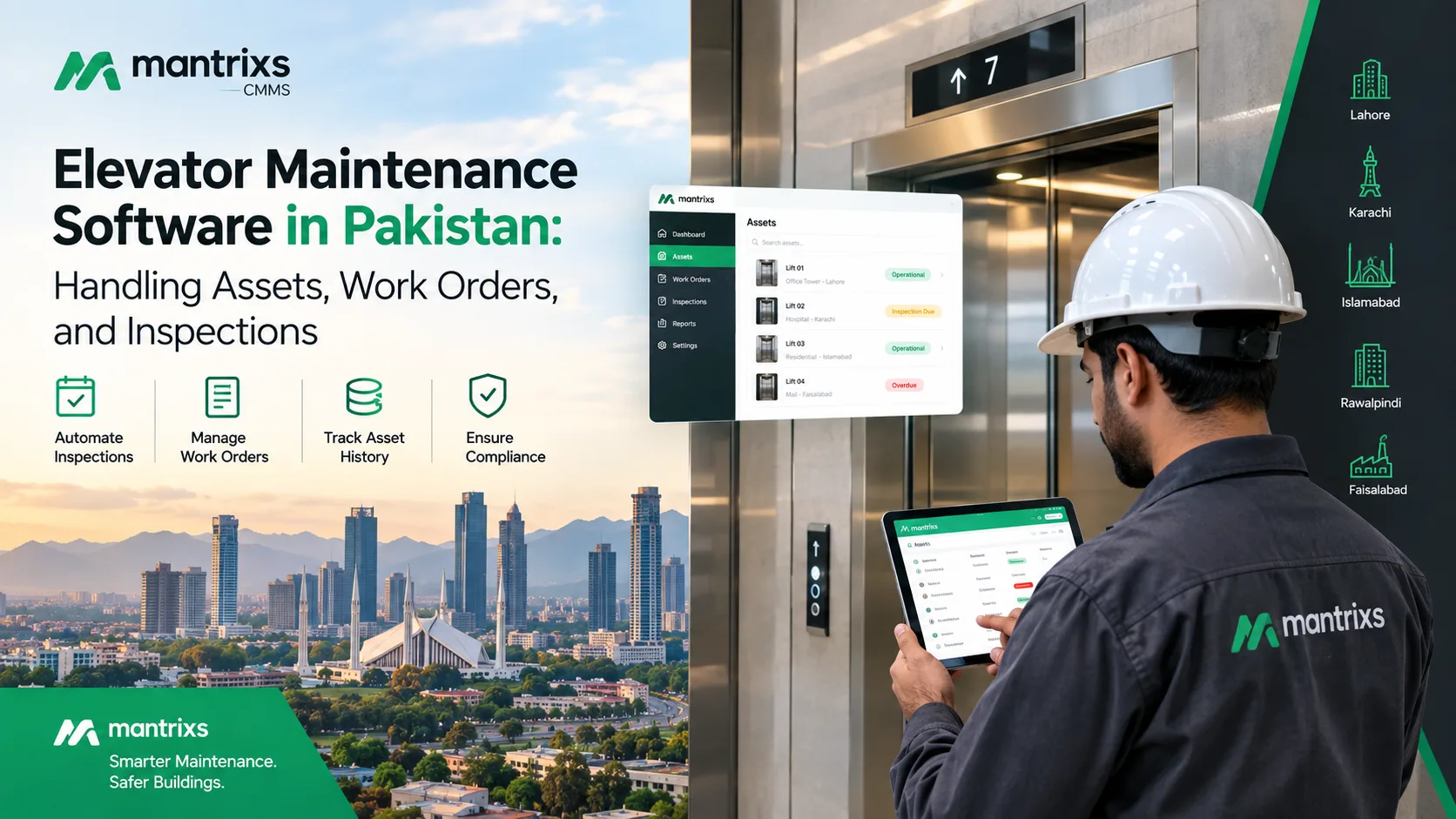
Elevator Maintenance Software in Pakistan: Handling Assets, Work Orders, and Inspections
Discover how elevator maintenance software in Pakistan helps facility teams manage assets, inspections, work orders, maintenance records, and multiple properties.