Wear and Tear
Wear and Tear: How It Impacts Equipment Performance
Everything, from heavy machinery to everyday tools, has a time when it needs to be replaced. What, then, decides how long that life will last? Wear and tear is a big one.
Everything, from heavy machinery to everyday tools, has a time when it needs to be replaced. What, then, decides how long that life will last? Wear and tear is a big one. This natural process can happen to even the best-kept tools, letting them down or not working at all when you least expect it. Wear and tear is something that everyone who uses equipment every day needs to know about.
We'll get into the specifics of wear and tear in this post, including what it is, why it happens, and how it impacts performance. In addition, we will talk about real ways to lessen its effects through good maintenance. If you want to make sure your tools work well and smoothly, keep reading!
What Is Wear and Tear in Equipment?
Everything, from heavy machinery to everyday tools, has a time when it needs to be replaced. What, then, decides how long that life will last? Wear and tear plays a big role. This natural process can happen to even the best-kept tools, letting them down or not working at all when you least expect it. Wear and tear is something that everyone who uses equipment every day needs to know about.
We'll get into the specifics of wear and tear in this post, including what it is, why it happens, and how it impacts performance. In addition, we will talk about real ways to lessen its effects through good maintenance. If you want to make sure your tools work well and smoothly, keep reading!
Common Causes of Wear and Tear
Wear and tear can stem from various sources, impacting equipment greatly. Friction is one of the main reasons for this. When moving parts rub against each other, it creates heat and gradually erodes surfaces.
Environmental factors also play a crucial role. Dust, wetness, and changes in temperature all speed up the breakdown process. For example, machinery that is left out in the humidity may rust faster than machinery that is kept in a controlled environment.
You also can't forget about operational habits. Overloading equipment or using machines beyond their intended capacity can lead to premature wear.
Lack of grease is another usual reason. When you don't oil things enough, friction goes up and parts break down faster. Taking care of these problems right away can help keep any piece of equipment working at its best.
How Wear and Tear Impacts Equipment Performance
The performance of equipment is greatly reduced by normal wear and tear, which often results in unexpected failures. Efficiency goes down over time as parts break down. This drop in performance can make machines work less well than they should.
Overheating can happen when worn-out parts cause more friction. When machines get too hot, they have a hard time keeping up with production and may even stop working altogether.
Wear and tear can also make safety standards less strict. When equipment isn't working right, it puts both the machine and the people who are working close at risk.
Frequent breakdowns resulting from wear issues disrupt workflows. These problems cause businesses to lose time and money, which is not what they want when they want their operations to run smoothly.
Monitoring equipment closely is essential in catching early signs of deterioration before they escalate into bigger problems. Regular assessment helps ensure all systems run efficiently while prolonging the life of valuable assets.
The Cost of Ignoring Wear and Tear
If you ignore wear and tear, bad things can happen. When equipment starts to break down, it usually doesn't work as well as it could. This wasteful behavior leads to higher energy costs, which hurts your bottom line.
Putting off upkeep or repairs can make small problems worse. What starts out as a simple fix could turn into a major problem that needs expensive repairs and more downtime.
Your group will be affected for a long time. Increased operational costs and lost productivity can hinder growth opportunities and damage your reputation with clients who rely on consistent service delivery.
Being proactive about wear and tear is important for maintaining not just equipment but also overall business health.
How Preventive Maintenance Helps Reduce Wear and Tear
Preventive maintenance is a very important part of keeping equipment in good shape. By setting up regular checks, you can find problems before they get worse and cost a lot to fix.
Regular maintenance chores like cleaning, lubricating, and replacing parts help keep things running at their best. This proactive method cuts down on the stress and friction that wear things down over time.
Training staff to spot early signs of wear also enhances your strategy. Knowledgeable employees can identify problems during routine checks, ensuring swift action is taken.
Additionally, following manufacturer guidelines for servicing promotes longevity. Adhering to recommended schedules fosters trust in machinery and boosts productivity across operations.
Putting in place a structured preventive maintenance program not only lowers risks, but it also makes your tools last a lot longer. By doing this, companies can keep running smoothly and avoid unplanned downtime caused by excessive wear.
Best Maintenance Practices to Extend Equipment Life
For tools to last as long as possible, it needs to be inspected regularly. Set up regular checks to find problems early on before they get worse. Being prepared can help you save time and money.
Another important practice is lubrication. Lubricate moving parts well to cut down on wear and friction. By taking this easy step, you can make machinery work better and last longer.
Educating staff on proper operating procedures also plays a vital role. Make sure everyone knows the right way to use tools so that it doesn't gets abused and wears out faster than it should.
Keep accurate maintenance records for each piece of equipment. Not only do these logs keep track of repairs, but they also help you see patterns in wear over time, which lets you make better decisions about how to do maintenance in the future.
How CMMS Software Helps Manage Equipment Wear and Tear
CMMS software is an important part of keeping track of how much equipment wears out. It makes maintenance chores easier and makes sure nothing is missed. With automated scheduling, it lets teams know when to do regular maintenance and repairs.
By logging data on each piece of equipment, CMMS enables organizations to track performance over time. This insight helps spot patterns related to wear and tear. Operators can handle issues before they escalate into larger problems.
Furthermore, the software aids in inventory management for spare parts. Making sure that all the parts that are needed are easily accessible cuts down on downtime during repairs.
Centralized dashboards let employees see detailed reports about the history of equipment and maintenance work. This openness helps people make better decisions about managing assets.
By using CMMS, you can improve efficiency and make expensive machinery last longer. Investing in this technology pays rewards by reducing unexpected breakdowns caused by wear and tear.
Conclusion: Prevent Wear and Tear Before It Causes Downtime
Preventing wear and tear is very important for keeping equipment working at its best. Problems can be found before they get worse with regular inspections, which saves time and money. Using a strong preventive maintenance plan will make sure that your equipment works well.
This process is sped up when you use CMMS software, which lets you plan maintenance tasks well. You can cut down on downtime caused by unexpected fails by using the right tools and following the right procedures.
Things that you do now that will pay off in the long run. Take care of wear and tear right away to protect your investment and keep your business running smoothly. Make maintenance a priority to get more use out of your tools and make it last longer.
Keep reading
More from the Mantrix blog

Parking Lot Maintenance: Save Money with Preventive Care
A proactive parking lot maintenance strategy helps prevent potholes, cracks, drainage issues, and costly repairs. This guide explains preventive maintenance, common parking lot problems,
Agtech Farm Equipment Maintenance: Common Challenges and How to Solve Them
Farm equipment maintenance is becoming more complex as modern machinery evolves. Learn how digital maintenance systems, preventive scheduling, and agtech solutions can reduce downtime and improve equipment reliability.
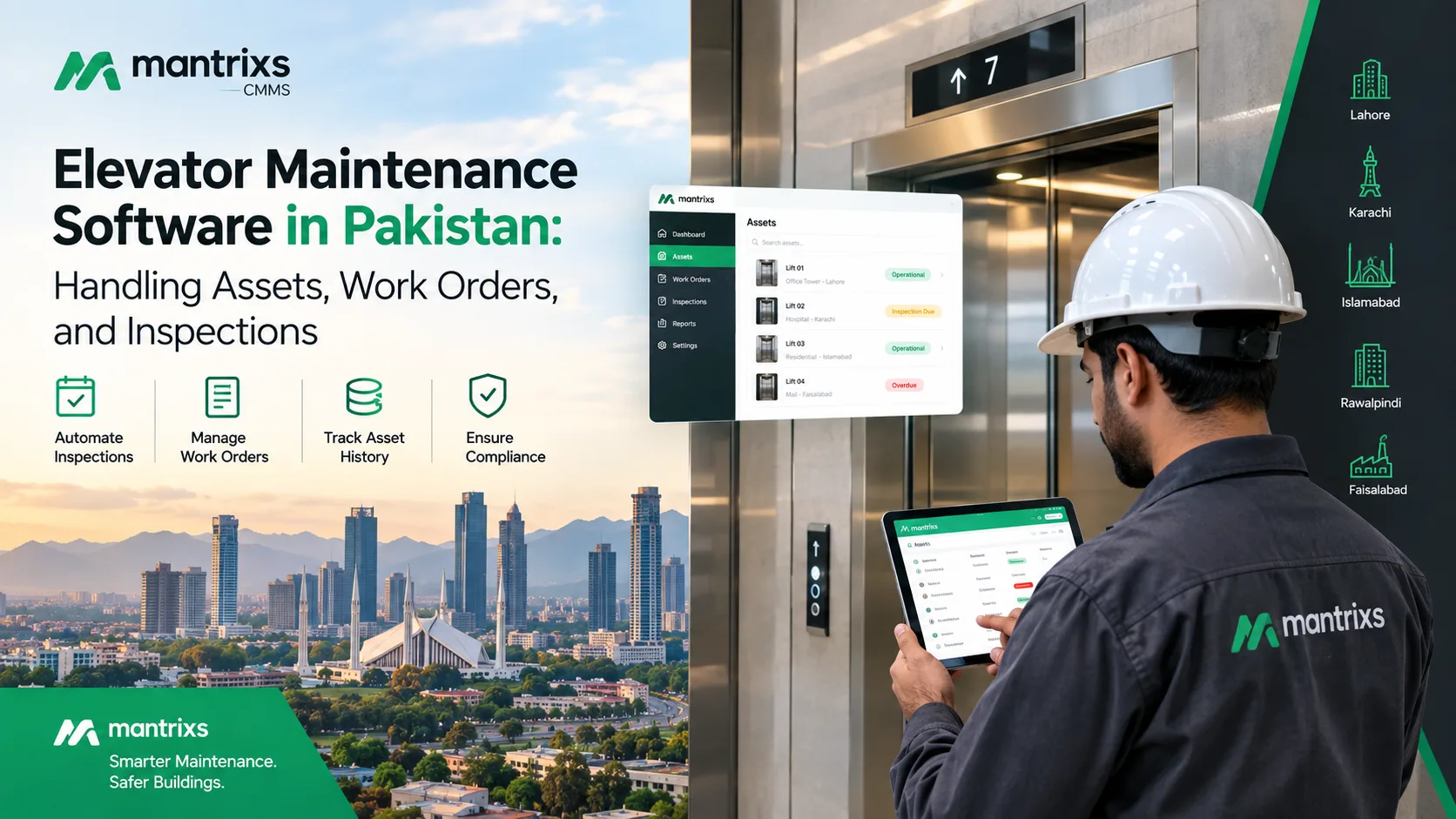
Elevator Maintenance Software in Pakistan: Handling Assets, Work Orders, and Inspections
Discover how elevator maintenance software in Pakistan helps facility teams manage assets, inspections, work orders, maintenance records, and multiple properties.