Remote Terminal Units
Remote Terminal Units: Smart Industrial Monitoring
Remote Terminal Units (RTUs) are essential for modern industrial monitoring, helping businesses collect real-time data, monitor remote equipment, improve safety, and reduce downtime.
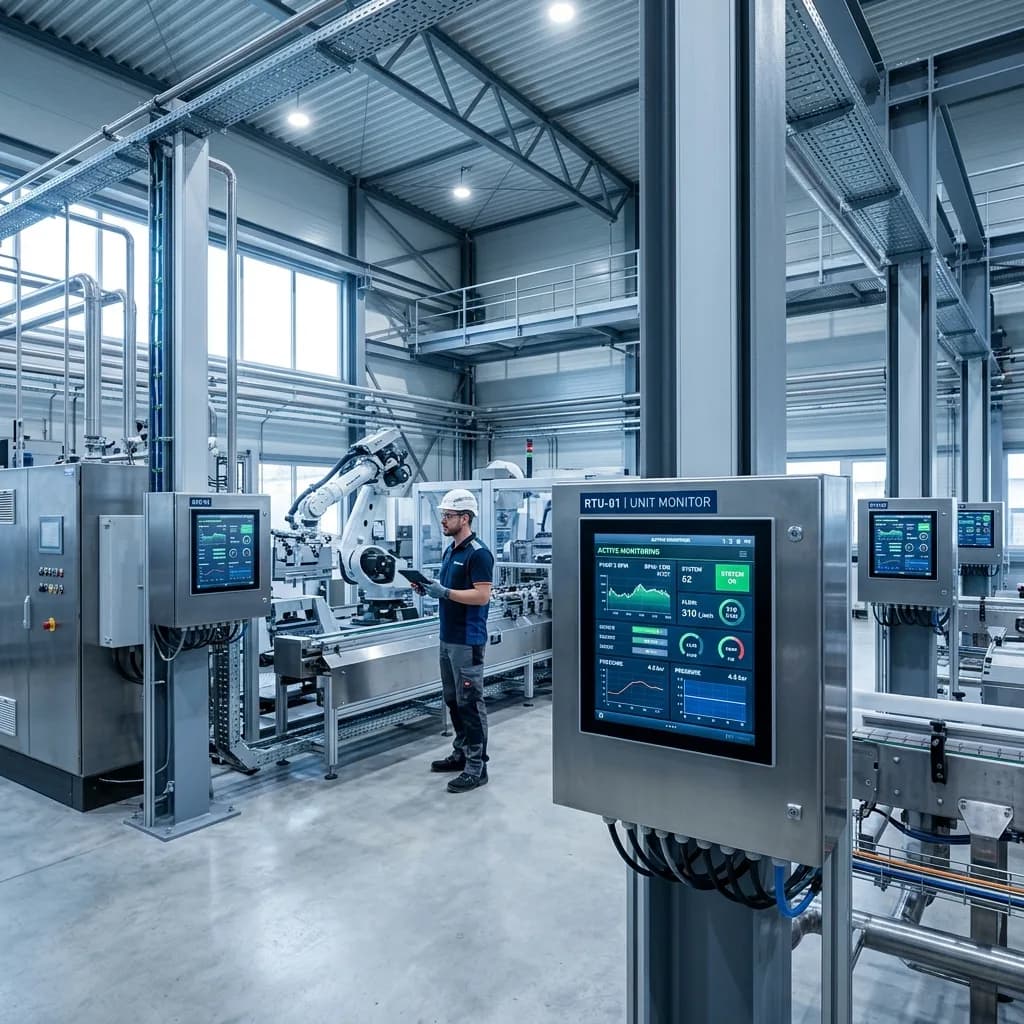
A Remote Terminal Unit (RTU) is a device that works in the field to gather data from sensors, process it locally, and send it to a main control system. RTUs make it possible to monitor factories in real time, lower costs through predictive maintenance, and raise safety by automating dangerous data collection chores.
Data is the lifeblood of business. Monitoring equipment in real time is what makes the difference between cost-effective and inefficient operations. This is true for both oil pipelines that go through remote areas and water treatment plants that serve whole cities. With remote terminal units, you can do that.
RTUs are in the middle of field instrumentation and centralized control. They collect sensor data in the background, make decisions locally, and send important data back to handlers, often over very long distances. As industrial settings get more complicated, smart RTUs have become an important part of how modern sites handle risk, cut down on downtime, and make better decisions.
Find out what RTUs are, how they work, where they're used, and what to look for in a solution in this post.
What Are Remote Terminal Units?
A Remote Terminal Unit is a microprocessor-based device that can be programmed and sent out into the field to control and monitor physical equipment. RTUs talk to sensors and actuators directly to measure things like voltage, temperature, pressure, flow rate, and flow rate. They then process the data and send it to a central control system, which is usually a SCADA platform.
Most RTU designs are made up of three main parts:
Sensors and I/O modules pick up digital and analog data from field gear.
Processing and control logic make decisions locally without waiting for information from the central system
Communication units send and receive data over wired or wireless networks, such as Ethernet, cellular, and satellite.
RTUs are designed to work in harsh conditions. They're not like regular computer hardware because they're made to work reliably in harsh conditions like high humidity, extreme temperatures, and electrical interference, which are common in heavy industry, energy, and utilities.
RTU vs. PLC: What's the Difference?
People often get RTUs and Programmable Logic Controllers (PLCs) mixed up, and there's a good reason for that: both use sensors and logic to automate control tasks. The main difference is the deployment situation.
PLCs are designed to handle fast, localized control in a single machine or building. RTUs, on the other hand, are made for sites that are far away and where connection reliability and low power consumption are more important than processing speed. RTUs also support more wide-area communication protocols out of the box, such as DNP3 and IEC 60870. This makes them better for monitoring distributed infrastructure.
In short, pick a PLC for a plant floor and an RTU for a pipeline that is 300 miles away from the nearest machine shop.
The Evolution of Industrial Monitoring
In the past, monitoring was done by hand with inspections, paper logs, and regular site visits. Technicians had to go to faraway places to read gages, check equipment, and write down data by hand. This took a lot of time, was prone to mistakes, and became less and less useful as infrastructure grew.
An increasing amount of that work was done automatically by RTU systems. Early RTUs could only do basic tracking, like getting a reading, sending it back, and doing it again. Smart RTUs do more. Modern RTUs don't just report data; they put it in context by using IoT connections and cloud-based platforms. This makes condition-based alerts, remote diagnostics, and predictive analytics possible that weren't possible before without having people on-site.
Core Benefits of RTU-Based Monitoring
Real-Time Visibility Across Remote Assets
RTUs get info from field equipment all the time, so operators can always get a clear picture of how healthy an asset is. An RTU can send out an alert or even an automatic shutoff within seconds of a pressure sensor detecting a problem in a pipeline. This is much faster than a person could inspect the pipeline and find the problem.
Predictive Maintenance and Reduced Downtime
It costs a lot to do reactive upkeep. In factories, equipment breakdowns that aren't planned for cost a lot more than planned maintenance, both in terms of the cost of repairs and the time spent making things. RTUs make predictive maintenance possible by keeping track of performance trends over time and letting you know about changes before they become major problems. Maintenance will now be planned instead of being done when something goes wrong.
Improved Safety Through Automation
Some monitoring tasks are naturally dangerous, like checking for gas levels in small spaces, looking at high-voltage equipment, or judging the situation during extreme weather. RTUs keep people safe in these situations by collecting data automatically and letting you handle them from afar. From a safe place, operators can check out dangerous situations and take action.
Smarter Decision-Making With Actionable Data
RTUs send structured data with timestamps to SCADA and enterprise systems. This sets the stage for analytics and reporting. Over time, this data helps with better planning for capital, making changes to operations, and keeping records of legal compliance.
RTU Applications Across Industries
Remote Terminal Units are used in many different areas, each of which has its own monitoring needs.
Oil and gas: finding pipeline leaks, keeping an eye on pressure, and controlling valves from afar over thousands of miles of infrastructure
Water and sewage: measuring flow, controlling pump stations, and keeping an eye on water quality in delivery networks
Power companies: automating substations, finding problems in the grid, and combining solar and wind power
Manufacturing: overseeing the production line, controlling the process, and keeping an eye on the health of the equipment
Transportation: managing traffic lights, keeping an eye on trains, and installing air systems in tunnels
All of these applications have one thing in common: assets are spread out geographically, constant supervision is needed, and monitoring by hand is neither practical nor cost-effective.
How Smart RTUs Work
These days, RTUs do a lot more than just send and receive data. From beginning to end, this is how a typical smart RTU works:
Data collection: The RTU reads inputs from multiple sensors at the same time, recording both analog signals (like pressure and temperature) and digital states (like whether a valve is open or closed).
Local processing: Onboard logic compares the data to pre-set limits and automatically acts, such as setting off a warning or closing a valve, without waiting for instructions from the central system.
Communication: Data that has been processed is sent to a SCADA platform or a cloud-based dashboard over wireless, satellite, or hardwired networks.
Remote access Operators can change set points, run diagnostics, or look at past trends on field assets through a central interface, all without having to go to the site.
Edge computing features in newer RTU models let even more work happen locally, cutting down on latency and bandwidth needs, which is very important in remote areas with poor connectivity.
Choosing the Right RTU Solution
There are different kinds of RTUs. If you choose the wrong option, you may have to pay a lot to fix things or get new features later on. Important things to look at are:
Scalability: As your infrastructure grows, can the RTU handle more I/O points and contact channels?
Dependability and toughness: Does the hardware have the right environmental permits for where you plan to use it?
Cybersecurity: Can the RTU handle secure firmware updates, encrypted communications, and authentication protocols?
Integration compatibility: Does it work with the SCADA platform and business systems you already have?
Support from the vendor: What does the service and support plan look like for the whole lifecycle of the product?
For applications that need to work quickly, on-premise RTU deployments give you more control over the data and lower latency. Cloud-connected systems, on the other hand, offer better scalability, centralized access, and easier software updates. A lot of current deployments use a hybrid method, which keeps important control logic close by while sending analytics and reporting to the cloud.
RTUs Are the Backbone of Industry 4.0
It is safe to say that Remote Terminal Units are an important part of modern industrial operations. Manufacturing, energy, and utilities are all changing because of Industry 4.0. RTUs are also changing to keep up, adding edge computing, 5G connectivity, and AI-driven analytics to respond even faster and smarter to situations in the field.
For your company, the next step is simple: look at the monitoring system you already have. Are your field assets giving you info in real time? Can your team find problems and fix them before they get worse? If you aren't sure about the answer to either question, you should really think about a modern RTU option.
Keep reading
More from the Mantrix blog

Parking Lot Maintenance: Save Money with Preventive Care
A proactive parking lot maintenance strategy helps prevent potholes, cracks, drainage issues, and costly repairs. This guide explains preventive maintenance, common parking lot problems,
Agtech Farm Equipment Maintenance: Common Challenges and How to Solve Them
Farm equipment maintenance is becoming more complex as modern machinery evolves. Learn how digital maintenance systems, preventive scheduling, and agtech solutions can reduce downtime and improve equipment reliability.
Elevator Maintenance Software in Pakistan: Handling Assets, Work Orders, and Inspections
Discover how elevator maintenance software in Pakistan helps facility teams manage assets, inspections, work orders, maintenance records, and multiple properties.