hospital assets
Hospital Asset Tracking Software: A Complete Guide
Hospital asset tracking software uses technologies like RFID, BLE, and GPS to monitor, manage, and maintain medical equipment in real time.
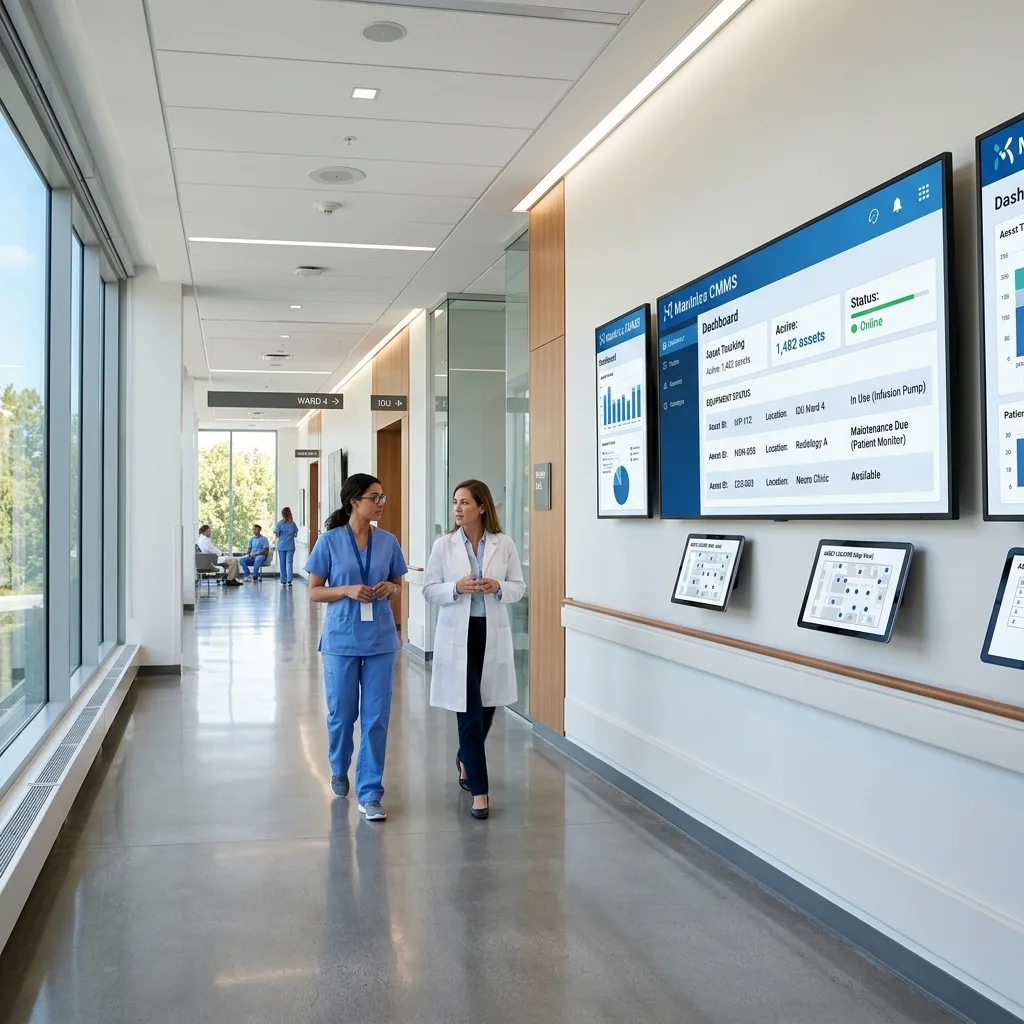
Hospital asset tracking software uses technologies like RFID, BLE, and GPS to monitor, manage, and maintain medical equipment in real time. With centralized asset visibility, Mantrix's CMMS is the best way for healthcare facilities to cut costs, improve regulatory compliance, and provide better patient care while reducing equipment loss.
Hospitals need things to work. If you don't have ventilators, infusion pumps, imaging machines, or surgical tools, you can't give care. But in a lot of healthcare places, these assets are still managed in a very reactive, hand-wavy, and inefficient way.
The staff wastes time looking for lost tools. Maintenance gets deferred. Audits show where compliance is lacking. Patients also have to wait longer than necessary because the right tool isn't always in the right place.
Hospital asset tracking software makes this possible. By giving facilities real-time visibility into every asset, its location, condition, maintenance history, and utilization rate these systems transform how hospitals function. Mantrixs CMMS is one such platform, purpose-built for the demands of modern healthcare environments.
Why Is Asset Management So Difficult in Hospitals?
Healthcare facilities are in charge of thousands of items spread out across many floors, departments, and buildings. Cracks show up quickly if there isn't a fixed point of tracking.
The Most Common Hospital Asset Management Challenges
Getting rid of or losing equipment is one of the most expensive problems that can happen. A portable ultrasound machine left in the wrong room or a wheelchair that wasn't returned after the patient was sent home may not seem like a big deal, but imagine what would happen if this happened with hundreds of assets and thousands of patients.
Poor asset utilization is equally damaging. Hospitals often over-purchase equipment because they lack visibility into what they already own. Capital expenditures that aren't necessary are caused by purchasing choices that are based on incomplete data.
Mistakes in following the rules increase the legal and financial risk. Healthcare regulators demand detailed maintenance records and equipment certifications. Keeping track of things by hand makes getting ready for an audit hard and prone to mistakes.
Deferred maintenance accelerates equipment degradation, shortens asset lifespan, and in the most serious cases adds to adverse patient outcomes.
All of these challenges share a common root: a lack of real-time asset visibility.
Key Features of Effective Hospital Asset Tracking Software
Real-Time Location Tracking with RFID, BLE, and GPS
With GPS, RFID and Bluetooth Low Energy (BLE), the CMMS from Mantrix always knows where its assets are. From a central dashboard, staff can quickly find any tagged asset. They no longer have to go from room to room searching for things by hand.
Comprehensive Asset Inventory and Database Management
Every asset in the hospital is listed in a central database, along with its description, date of purchase, state of the warranty, service records, and department that it belongs to. This single source of truth gets rid of the need for double data entry and gives buying teams accurate information before they decide what to buy.
Maintenance Scheduling and Work Order Management
Mantrix’s CMMS automatically generates a schedule for preventative maintenance based on the data received from the usage and manufacturer recommendations. You don't have to rely on paper calendars or memory because the system quickly makes work orders and sends them to the right technician when maintenance is due.
Depreciation Tracking and Financial Reporting
Depreciation of assets is calculated automatically, which gives finance teams accurate data for budgeting, planning for capital purchases, and reporting on finances. This feature helps hospitals figure out how much it really costs to own each type of asset.
Integration with EHR and EAM Systems
The CMMS from Mantrix works with Electronic Health Record (EHR) systems and Enterprise Asset Management (EAM) platforms that are already in place in hospitals. Instead of separating data into separate silos, Mantrix's CMMS links workflows between departments.
Reporting and Analytics for Data-Driven Decisions
Dashboards and reports that can be customized let administrators see how much the system is being used, how much it costs to maintain, how often it goes down, and its compliance status. Instead of fixing problems after they happen, these insights allow proactive, evidence-based asset management.
What Are the Benefits of Hospital Asset Tracking Software?
Implementing hospital asset tracking software delivers measurable gains across finance, operations, compliance, and patient care.
Less money spent on capital: Better info on utilization stops buying equipment that isn't needed.
Easier compliance: Automated maintenance records and reports ready for audits decrease the risk of non-compliance.
Higher staff productivity: Clinical professionals no longer need to spend time searching for equipment and can focus on the patient.
Better safety for patients: important tools can be found when and where they're needed.
Streamlined maintenance processes: automated work orders cut down on equipment downtime and make assets last longer.
Strong ROI: The money you save from fewer losses, better use, and putting off replacements usually covers the costs of implementation.
What hospital needs can Mantrix’s CMMS fulfill?
It's not made for general building management; Mantrix's CMMS is made to handle the complexity of real hospital settings.
With department-specific solutions, IT teams, radiology departments, ICUs, and surgical units can all manage their own types of assets from a single platform. The needs of a surgical team keeping track of sterilization cycles are different from those of an IT team managing server hardware. Mantrix's CMMS can handle both types of needs.
A user-friendly interface accelerates adoption. Since clinical staff aren't trained to be data managers, they have a long way to go before they can be successful. Mantrix's CMMS is designed to be easy to use so that it takes less time to get started.
That means scalability the platform works for a 50-bed community hospital as well as a 2,000-bed health system. The CMMS from Mantrix grows with the building.
Healthcare privacy laws are met by secure data management, which keeps sensitive asset and operational data from getting into the wrong hands.
How Should Hospitals Implement Asset Tracking Software?
Step 1: Planning and Assessment
Before they choose software, hospitals should take a look at their present assets, figure out what's not working, and set goals for success. To have an effective deployment, you must first know what you need and what you have.
Step 2: Vendor Selection
Check how well vendors can integrate, how scalable they are, how they handle support, and what healthcare-specific features they offer. The CMMS from Mantrix stands out because it was designed to work in hospital settings and is adaptable to different departments and building sizes.
Step 3: Deployment and Integration
Install tracking devices (like RFID readers and BLE beacons) and connect the software to other hospital systems with the help of your IT team and the provider. Starting with high-value or high-risk assets and rolling out slowly lowers disruption.
Step 4: Staff Training and Change Management
If people don't adopt technology, it won't work. Spend money on organized training for the people who work in maintenance, administration, and the clinic. Make the benefits clear to get people to participate and lower their reluctance.
Step 5: Continuous Monitoring and Optimization
Once the rollout is done, use Mantrix's CMMS's reporting tools to keep an eye on how things are being used, find places where things are taking too long, and keep making things better.
What Are the Emerging Trends in Hospital Asset Tracking?
With the help of AI and machine learning, hospitals can switch from planned maintenance to maintenance based on conditions. Instead of changing a part at set times, AI models figure out when it's most likely to break and only do maintenance when it's needed.
IoT advancements are expanding the scope of trackable assets. Besides telling you where something is, sensors built into it now also tell you how often it is used, what temperature it is, and whether it is working or not in real time.
As hospital networks link to each other more, improving security is becoming more and more important. Future platforms for tracking assets will have to meet stricter data protection rules. This is especially important for healthcare, which is very vulnerable to cyber threats.
Start Managing Hospital Assets Smarter
Assets that aren't tracked cost hospitals money, time, and sometimes even patient health. Hospital asset tracking software eliminates the guesswork, replacing reactive management with real-time visibility, automated processes, and data-driven decision-making.
With a platform made just for healthcare needs, Mantrixs CMMS gives healthcare facilities the tools they need to keep track of their assets, from a single infusion pump to a whole fleet of imaging equipment.
Do you want to see what better asset management looks like? Today, ask for a demo of Mantrixs' CMMS to find out how your facility can cut costs, improve compliance, and give better care to patients.
Keep reading
More from the Mantrix blog

Parking Lot Maintenance: Save Money with Preventive Care
A proactive parking lot maintenance strategy helps prevent potholes, cracks, drainage issues, and costly repairs. This guide explains preventive maintenance, common parking lot problems,

Agtech Farm Equipment Maintenance: Common Challenges and How to Solve Them
Farm equipment maintenance is becoming more complex as modern machinery evolves. Learn how digital maintenance systems, preventive scheduling, and agtech solutions can reduce downtime and improve equipment reliability.
Elevator Maintenance Software in Pakistan: Handling Assets, Work Orders, and Inspections
Discover how elevator maintenance software in Pakistan helps facility teams manage assets, inspections, work orders, maintenance records, and multiple properties.